A sofa typically lasts about 7–15 years, but the range is wide: a budget sofa may feel worn out in 3–5 years, while a well-built sofa with a hardwood frame can last 20 years or more, especially if you replace the cushions or reupholster it along the way. Construction quality, materials and how hard the sofa is used matter far more than its age.
This guide explains how long different kinds of sofas usually last, the signs that yours is near the end, how to make it last longer, and how to decide between repairing and replacing it.
Key points
- Typical lifespans: budget sofas around 3–5 years, mid-range around 7–10 years, high-quality sofas 15 years or more.
- The frame usually lasts longest; cushions and upholstery wear out first and can often be replaced.
- Sagging that does not recover, a wobbly or creaking frame, and peeling or torn upholstery are the main signs it is time to act.
- Rotating cushions, keeping the sofa out of strong sun, and cleaning regularly add years.
- Repair is usually worth it when the frame is solid hardwood; replace when the frame itself is weak or broken.
In this guide
Typical sofa lifespan by quality
These are rough ranges for a sofa in everyday family use. A sofa in a rarely used formal room will last longer; one shared with children and pets may wear out sooner.
| Quality level | Typical lifespan | What it is usually made of |
|---|---|---|
| Budget | About 3–5 years | Particleboard or softwood frame, stapled joints, low-density foam, thin webbing |
| Mid-range | About 7–10 years | Plywood and hardwood frame, sinuous springs, medium-density foam |
| High quality | 15–20+ years | Kiln-dried hardwood frame with reinforced joints, heavy-gauge or hand-tied springs, high-resilience foam |
Our sofa construction guide explains how to recognize each of these frames, spring systems and foams, so you can judge a sofa's likely lifespan before you buy.
How long each part of a sofa lasts
A sofa does not wear out all at once. Knowing which parts fail first helps you decide what is worth fixing.
- Frame: a kiln-dried hardwood frame with glued and screwed or dowelled joints can last for decades. Particleboard and stapled frames tend to loosen within a few years.
- Springs and webbing: eight-way hand-tied coils and heavy-gauge sinuous springs often last as long as the frame. Elastic webbing, especially cheaper webbing, stretches and sags sooner.
- Cushions: low-density foam can lose noticeable support within a few years. High-resilience foam of about 2.5 lb/ft³ (40 kg/m³) or more often stays supportive for a decade. Feather and down last well but need daily plumping.
- Upholstery: depends heavily on the material and how it is used, as the next section shows.
Lifespan by upholstery material
| Material | Typical lifespan with care | How it usually wears |
|---|---|---|
| Full-grain or top-grain leather | 15–20+ years | Softens and develops a patina; can dry out or crack if never conditioned |
| Bonded leather | Often only a few years | The surface layer peels and flakes; hard to repair |
| Faux leather (polyurethane) | Around 3–5 years for budget grades, longer for better ones | Cracking and peeling, especially on seats and arms |
| Tightly woven or performance fabric | 10+ years | Gradual fading and softening; resists pilling and snags |
| Loosely woven or delicate fabric | Shorter in heavy use | Pilling, snags, worn arms and seat fronts |
For fabric, the rub count is a useful clue. Fabrics rated around 15,000 double rubs (Wyzenbeek test) or 20,000–25,000 cycles (Martindale test) are generally considered suitable for everyday home use. Our guide to sofa upholstery fabrics compares the options, and our leather vs fabric guide weighs durability against comfort and cost. If you are looking at synthetic leather, our faux leather sofa guide explains the difference between grades.
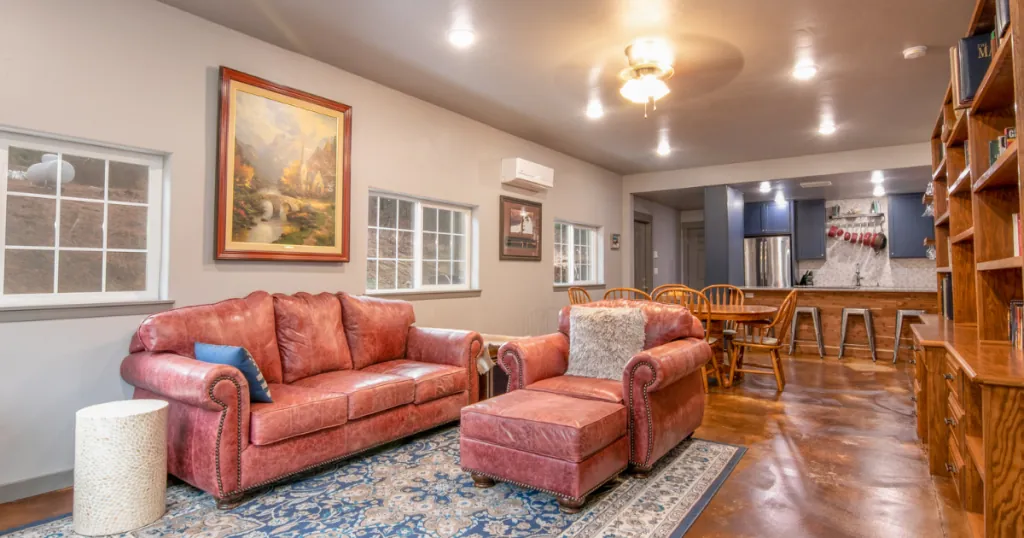
Signs it is time to replace your sofa
Age alone is not a reason to replace a sofa. These signs are.
- Sagging that does not recover: cushions stay flat after plumping and rotating, or the seat dips even with new cushions.
- A noisy or unstable frame: creaking, cracking sounds, a wobbly arm, or a seat that slopes to one side.
- Springs you can feel: lumps, loose wires, or a spring that pokes through the deck.
- Upholstery past saving: large tears, worn-through arms, or bonded and faux leather that is peeling.
- Persistent odors or stains: smells that come back after deep cleaning, often a sign that the padding itself is affected.
- Pests or mold: signs of bed bugs or mold need professional advice, and replacement is often the safest choice.
- It no longer suits you: it is uncomfortable, does not fit the room, or no longer works for your household.
How to check your sofa's condition
A quick inspection tells you whether you are dealing with worn cushions, which are cheap to fix, or a failing structure.
- Remove the cushions. Look at the deck. It should be level, without a dip in the favorite seat.
- Press the deck. Push down in several places. Even resistance is good; soft spots or loose wires point to springs or webbing.
- Test the frame. Lift one front corner a few inches off the floor. On a rigid frame, the other front leg lifts soon after. If the frame twists or creaks, it is weak.
- Rock the arms and back. Push them gently back and forth. Movement or clicking means loose joints.
- Compare the cushions. Lay them side by side on the floor. Big differences in height mean the most-used ones need new filling.
Avoid: lifting a heavy sofa on your own, or lifting it by the arms. Ask someone to help, and lift by the frame underneath.
How to make a sofa last longer
Most of the wear on a sofa comes from uneven use, sunlight, spills and rough handling. These habits help with all of them.
- Rotate and flip cushions: every week or two, so the favorite seat does not wear out first.
- Plump loose cushions: feather, down and fiber fills last longer when they are plumped often.
- Keep it out of strong sun and away from heat: direct sunlight fades fabric and dries leather, and radiators or vents dry out leather and wood. Leave some space between the sofa and any heat source.
- Vacuum regularly: grit works into fabric fibers and wears them down. Use the upholstery brush weekly.
- Deal with spills quickly: blot, do not rub. See our guide on how to clean a fabric sofa.
- Condition leather: clean and condition leather about once or twice a year, or more often in dry climates. Our guide on how to condition a leather sofa explains how.
- Protect it from pets and children: a washable cover takes the wear instead of the upholstery. See our sofa slipcover guide.
- Do not sit on the arms or jump on the seat: both strain joints and springs that are not built for it.
- Lift, do not drag: dragging a sofa twists the frame and can loosen the legs.
- Tighten the legs: check screw-in legs every few months and tighten them by hand.
Tip: Swap the seat cushions' positions on a fixed schedule, for example on the first of each month. It is the single cheapest way to keep a sofa looking and feeling even.
Repair or replace?
Many sofa problems are fixable, and on a well-built sofa a repair is often far better value than a new one. The frame is the deciding factor: if it is solid, almost everything else can be renewed.
| Problem | Usual fix | Usually worth it? |
|---|---|---|
| Flat or saggy cushions | New foam or feather inserts | Yes, if the frame and springs are sound |
| Sagging deck | New webbing, re-clipped or re-tied springs | Yes, on a decent frame |
| Wobbly arm or loose joint | Re-gluing, corner blocks, new screws | Yes on hardwood; less so on particleboard |
| Cracked frame rail | Professional frame repair | On a quality hardwood frame, often yes |
| Worn or stained fabric | Slipcover or reupholstery | A slipcover is a cheap fix; reupholstery suits quality or sentimental sofas |
| Scuffed or cracked genuine leather | Cleaning, conditioning, color repair | Usually yes |
| Peeling bonded or faux leather | Cover it or replace | Rarely repairable |
For leather damage, our leather sofa repair guide covers scratches, tears and color loss.
Is reupholstering worth it?
Pros
- Keeps a well-built frame that may be better than new sofas at the same price.
- You choose the fabric, and often new foam at the same time.
- Keeps a sofa with sentimental value, and keeps it out of the landfill.
Cons
- Often costs about as much as a new mid-range sofa.
- Takes weeks, and you are without the sofa meanwhile.
- Not worth it on a weak frame or a sofa you never found comfortable.
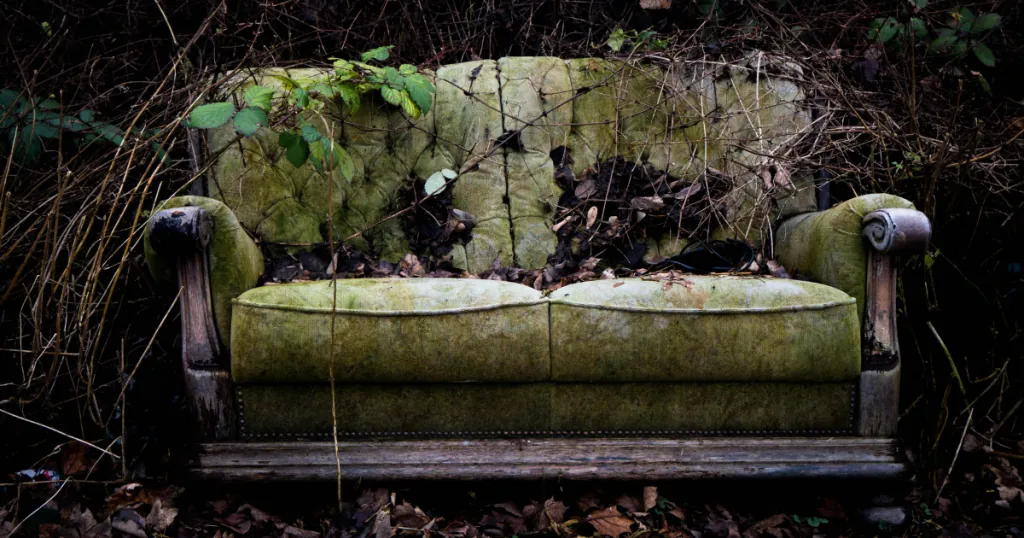
If replacing is the right call, plan what happens to the old one. Our guide on how to get rid of an old sofa covers donating, selling, recycling and bulk pickup.
Frequently asked questions
How often should you replace a sofa?
There is no fixed schedule. Many households replace a sofa every 7–15 years, but a well-built sofa can last much longer with new cushions or reupholstery. Replace it when the frame or support fails, or when it no longer suits you.
Is a 10-year-old sofa too old?
Not necessarily. A mid-range sofa may be near the end of its life at 10 years, while a quality sofa with a hardwood frame may only need new cushions. Check the frame, springs and cushions before deciding.
How long does a leather sofa last?
A full-grain or top-grain leather sofa often lasts 15–20 years or more with regular cleaning and conditioning. Bonded leather usually lasts only a few years before it starts to peel.
How long do sofa cushions last?
It depends on the fill. Low-density foam can soften noticeably within a few years, while high-resilience foam often stays supportive for around a decade. Feather and down last well if they are plumped regularly.
Can you replace just the cushions on a sofa?
Yes. If the frame and springs are in good shape, new foam or feather inserts in the existing covers can make a sofa feel much newer for a fraction of the cost of replacing it.
A sofa that is chosen well and looked after can serve you for many years, and many problems are cheaper to fix than you might expect. For ways to bring back comfort without replacing anything, read our guide on how to make a sofa more comfortable.
 Sectional vs Sofa: Which Is Right for Your Living Room?Sectional or a standard sofa? Compare floor space, seating, room layout, moving and cost, with measurements and a simple checklist to decide.
 Sofas for Small Spaces: How to Choose One That FitsHow to pick a sofa for a small living room or apartment: the right size, arm and leg styles, depth, colors, sleeper and modular options, and what to avoid.
 How to Measure for a New Sofa (Room, Doorways and Stairs)Measure your room, doorways, hallways and stairs before buying a sofa. Step-by-step instructions, clearances and the diagonal-depth test for tight doors.
 What Makes a Good Sofa? Frame, Springs and Cushions ExplainedHow to judge sofa quality: frame materials and joints, spring systems, foam density and cushion fills, plus quick tests you can do in a showroom.