A faux leather sofa can be a smart buy or a short-lived one, and the difference is mostly the material under the leather-look surface. Vinyl (PVC) is tough and wipe-clean, good polyurethane (PU) is soft and convincing, and bonded leather is the type most likely to start peeling within a few years.
This guide explains how the three compare, why faux leather peels and cracks, how to clean it without shortening its life, how to fix a small tear, and when faux leather is (and is not) worth your money.
Key points
- Faux leather is a plastic coating (PU or PVC) on a fabric backing. Bonded leather has leather fibers inside, but its surface is PU, so it behaves like faux leather.
- Vinyl is the most durable and easiest to clean. PU feels softer but can flake as it ages, especially with heat, sun and body oils.
- Clean it with a damp microfiber cloth and a few drops of mild dish soap. Skip oil-based leather conditioners, solvents and abrasive pads.
- A small tear can be fixed with a vinyl repair kit. Widespread peeling cannot really be repaired, only covered or reupholstered.
- Faux leather makes most sense on a tight budget, for a short-term home, or where spills are constant. For a long-term sofa, real top-grain leather or a good fabric usually ages better.
In this guide
- What faux leather actually is
- PU vs vinyl vs bonded leather
- How to tell faux leather from real leather
- How durable is faux leather?
- Pros and cons of a faux leather sofa
- How to clean a faux leather sofa
- Should you condition faux leather?
- How to fix a small tear in faux leather
- How to prevent damage
- Is a faux leather sofa a good buy?
- Frequently asked questions

What faux leather actually is
Faux leather is a layer of plastic, usually polyurethane or polyvinyl chloride, applied to a woven or knitted fabric backing. The surface is then embossed with a grain pattern and finished to look like hide. Because it contains no animal skin, it is cheaper and perfectly uniform in color, but it does not breathe, cannot absorb conditioner and will never develop the patina that real leather does.
Product listings use many names for the same family of materials, so read the material description rather than the product title:
- Leatherette, synthetic leather, vegan leather: general marketing terms. They can mean PU or vinyl.
- PU leather: polyurethane on a fabric backing. Despite the name, there is no leather in it.
- Vinyl or PVC: polyvinyl chloride on a fabric backing, the classic material for diners, hospitals and budget recliners.
- Bonded leather: shredded leather scraps mixed with a binder, pressed onto a backing and covered with a PU surface, so you only ever touch the plastic coating.
- Bicast leather: a thin split layer of real hide under a thick PU coating. Like bonded leather, it can peel when the coating wears.
- Leather match: real leather where you sit, with matching vinyl or PU on the sides and back. This is common and fine, as long as it is clearly stated.
For a full overview of real leather grades and finishes, see our guide to leather sofa types.
PU vs vinyl vs bonded leather
The three materials look similar in a showroom but age very differently. This is how they typically compare:
| PU (polyurethane) | Vinyl (PVC) | Bonded leather | |
|---|---|---|---|
| Feel | Soft, flexible, closest to real leather | Firmer and smoother; can feel sticky in heat | Similar to PU |
| Breathability | Slightly better than vinyl, still warm in summer | Does not breathe | Does not breathe |
| Spills and stains | Very good | Excellent | Good |
| Typical weak point | Coating breaks down and flakes over time | Gets stiff and cracks if it dries out in sun or heat | Surface peels away from the backing |
| Long-term durability | Fair to good, depending on quality | Good | Poor |
| Best for | Budget sofas where softness matters | Heavy use, kids, rentals, commercial spaces | Short-term use only |
Quality varies a lot within each type. A thick PU on a strong knit backing can outlast a thin vinyl, so ask about the material and the warranty, not only the name.
How to tell faux leather from real leather
If the label is missing or vague, these checks help:
- Look underneath. Lift a cushion or look at the underside of a seam. A fabric backing (knit or woven threads) means faux leather; real leather shows a fibrous, suede-like back.
- Look at the grain. Real hide has irregular pores, small scars and wrinkles. Faux leather often repeats the same pattern across a panel.
- Press and pinch. Real leather wrinkles softly and slowly recovers; faux leather often springs back at once and feels more plastic.
- Smell it. Real leather smells earthy; faux leather smells faintly of plastic, especially when new.
How durable is faux leather?
Faux leather resists spills and staining very well, which is why it works in busy family rooms. Its weakness is the coating itself: once the plastic surface breaks down, it cannot be revived the way real leather can.
Why faux leather peels and cracks
- Age of the coating. PU slowly breaks down over time, a process sped up by heat and humidity. Lower-grade PU and bonded leather are the most affected.
- Body oils, sweat and hair products. Headrests, arms and seat fronts usually peel first because they get the most skin contact.
- Sun and heat. UV light and nearby radiators, fireplaces or heating vents dry out vinyl and weaken PU.
- Harsh cleaners. Solvents, bleach, ammonia and alcohol-based sprays can soften or strip the top coat.
- Abrasion and stretching. Rough fabrics, sitting on the arms, and claws all wear through the thin top layer.
How long does a faux leather sofa last?
It depends heavily on the grade. Low-grade PU and bonded leather often start to flake within two to five years of daily use. Good vinyl and quality PU on a well-built frame can last considerably longer. Our guide to how long a sofa lasts covers frames, cushions and upholstery side by side.
Pros and cons of a faux leather sofa
Pros
- Costs much less than real leather
- Wipes clean easily; spills sit on the surface
- Uniform color, with a wide choice of shades and textures
- Does not trap pet hair, dust or dander
- No animal hide, which matters to many buyers
Cons
- Can peel or crack, and the damage cannot be reversed
- Does not breathe, so it feels warm and sticky in summer
- New sofas can have a plastic smell for a while
- Claws and sharp objects can puncture it
- Made from petroleum-based plastics and hard to recycle
On the environmental question there is no simple winner. Faux leather avoids animal hides and tanning, but it is made from fossil-based plastics, and a sofa that must be replaced after a few years adds to its footprint.
How to clean a faux leather sofa
Most faux leather needs nothing stronger than water and a little mild soap. Wipe it down weekly and give it a fuller clean about once a month, or sooner if it gets heavy use. For real leather, the method is different: see how to clean a leather sofa.
You will need: a vacuum with a soft brush attachment, two or three microfiber cloths, warm water, and mild dish soap.
- Vacuum first. Use the soft brush to remove crumbs, grit and pet hair, especially along seams and in the crevices between cushions. Grit left on the surface acts like sandpaper.
- Mix a mild solution. Stir about 1 teaspoon of mild dish soap into 2 cups (about 500 ml) of warm water.
- Test a hidden spot. Try the solution on the back or underside first and let it dry.
- Wipe in sections. Dip a microfiber cloth, wring it until it is only damp, and wipe one area at a time with gentle circular motions. For textured surfaces, a very soft brush can lift dirt from the grain.
- Rinse. Wipe each section again with a cloth dampened in plain water to remove soap residue, which can leave the surface dull or tacky.
- Dry by hand. Buff dry with a clean cloth and let the sofa air-dry. Never use a hair dryer or heater, which can warp or crack the coating.
Stubborn marks and ink
For a mark that soap will not shift, dab it with a cotton swab barely moistened with isopropyl (rubbing) alcohol. Test it in a hidden spot first, because alcohol can dull or soften some PU finishes. Dab, do not rub, and wipe with a damp cloth straight afterward. Diluted white vinegar (equal parts vinegar and water) is often suggested; it is usually fine on vinyl for occasional use, but it is acidic, so test it, rinse it off, and do not make it a routine on PU.
Avoid: bleach, ammonia, acetone and other solvents, all-purpose sprays, melamine "magic eraser" sponges and scouring pads. They strip or scratch the thin top coat, and once that layer is damaged it starts to crack and peel.
Should you condition faux leather?
Not with a regular leather conditioner. Real leather is porous and absorbs the oils in a conditioner; faux leather is a plastic film and cannot. Oil-based products sit on the surface, feel greasy, attract dirt, and some can soften a PU coating. Home mixtures such as vinegar with olive oil have the same problem, and food oils can turn rancid.
If you want extra protection, use a water-based protectant that is labeled for vinyl or faux leather, ideally one with UV protection, a few times a year. Apply a thin coat with a soft cloth and buff off the excess. On a well-kept sofa in a shaded spot, regular cleaning alone is usually enough.
How to fix a small tear in faux leather
Small tears, cuts and punctures are worth repairing on a sofa that is otherwise in good shape. Use a repair kit made for vinyl and faux leather, not one for real leather, and follow its instructions where they differ from these general steps.
- Clean the area. Wipe around the tear with the mild soap solution, rinse, and let it dry completely so the adhesive can bond.
- Trim loose threads. Snip away frayed fibers with small sharp scissors. Cut only what is loose, so the tear does not get bigger.
- Insert a backing patch. Cut the backing fabric about 1/2 in (1.3 cm) larger than the tear on every side, round the corners, and slide it under the tear with tweezers or a small spatula.
- Glue the edges down. Apply flexible adhesive between the patch and the underside of the tear, and press the edges together so they meet without overlapping.
- Fill in thin layers. Spread flexible filler over the gap with a palette knife, letting each thin layer dry, until it is level with the surface.
- Level and texture. If the dried filler stands proud, sand only the filler very lightly; sanding the surrounding surface scuffs the top coat. If the kit includes grain paper, press a texture into the final layer.
- Color and seal. Test the colorant on a hidden spot, dab it on with a sponge, feather the edges, and apply the sealer if one is included.
- Let it cure. Keep people and pets off the area for the full curing time, often about 24 hours.
Tears up to about 2 in (5 cm) on a flat panel are realistic DIY jobs. Long tears, tears along a seam, and damage on the front edge of a seat cushion are under constant tension, so a professional repair or a new panel usually lasts longer. Our leather sofa repair guide covers seams, sagging and cushions in more detail.
Peeling and flaking: what can be done
Peeling is a different problem: the surface layer has separated from its backing, and new flakes keep appearing around the old ones. Repair kits and flexible paints can hide a small patch for a while, but on seats and arms the fix rarely lasts. Realistic options are:
- Tidy and cover: gently remove loose flakes, wipe the area clean, and use a fitted cover. Our sofa slipcover guide explains how to find one that fits.
- Reupholster: worth it if the frame and cushions are solid. Some upholsterers can replace only the worst panels.
- Replace: often the sensible choice for an inexpensive bonded leather sofa with peeling on several cushions.
How to prevent damage
- Keep the sofa out of direct sunlight and at least 2 ft (60 cm) from radiators, fireplaces and heating vents.
- Wipe headrests and arms weekly to remove body oils, or use a washable throw where heads rest.
- Wipe spills straight away, before they work into seams.
- Keep sharp objects and studded clothing off the seats, and trim pets' nails. See our pet-friendly sofa guide if claws are a concern.
- Rotate and flip cushions so wear spreads evenly.
Tip: Keep any spare material, tags and the care label that came with the sofa. They tell you whether it is PU or vinyl, and an offcut is ideal for testing cleaners and color-matching repairs.
Is a faux leather sofa a good buy?
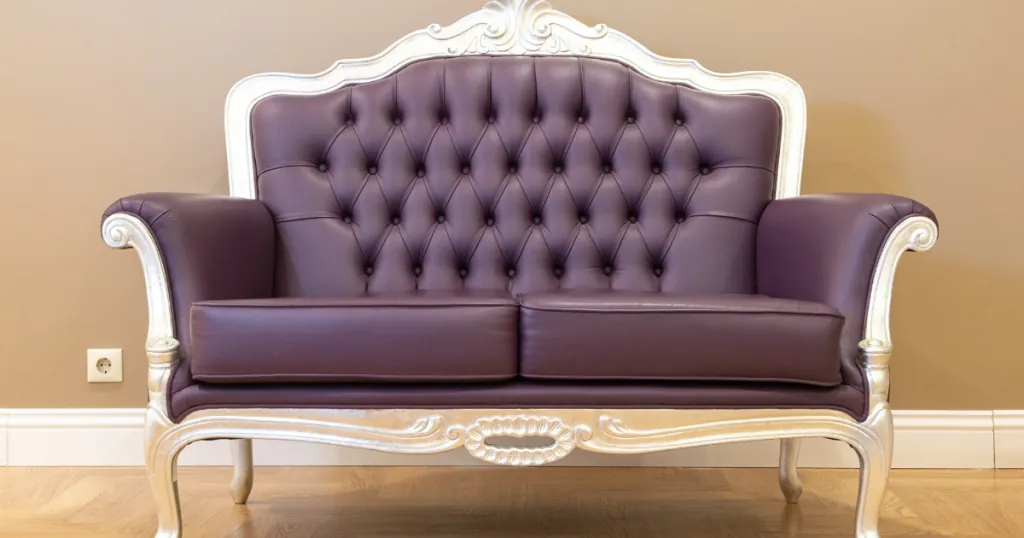
It can be, as long as you buy it for the right reasons and choose the right type.
Good choice when…
You need a low-cost sofa, you rent or expect to move within a few years, spills from kids are constant, you want a bold color, or you prefer to avoid animal products. Vinyl or a quality PU are the types to look for.
Think twice when…
You want a sofa for ten years or more, the room gets strong sun or heat, or the seller only says "bonded leather". In those cases, top-grain leather or a durable fabric is usually the better long-term buy.
Before you buy, ask what the surface is made of (PU, PVC or bonded), what the backing is, and whether the warranty covers peeling or cracking. A sofa is also only as good as its frame and cushions, which our sofa construction guide explains. If you are still deciding on upholstery, compare the options in leather vs fabric sofas.
Frequently asked questions
Is faux leather durable?
It resists spills and stains very well, and good vinyl holds up to heavy use. Its weak point is the plastic coating, which can crack or peel as it ages, especially on cheaper PU and bonded leather. Quality and care make a big difference.
Can I use leather conditioner on faux leather?
It is not recommended. Faux leather cannot absorb the oils in a leather conditioner, so the product sits on the surface, attracts dirt and may soften the coating. Use only a water-based protectant labeled for vinyl or faux leather.
Is faux leather good with cats and dogs?
It does not hold hair or odors and wipes clean easily, but claws can puncture it and the damage cannot be buffed out. Tightly woven performance fabrics are often a better match for pets that scratch.
Why does my new faux leather sofa smell?
New PU and vinyl can release a plastic or chemical smell for a while after unpacking. Ventilate the room well, keep the sofa out of hot sun, and the smell usually fades over a few weeks.
Can peeling faux leather be fixed?
Not permanently. You can remove loose flakes and hide small areas with a repair kit or flexible paint, but the coating will keep separating. A cover, reupholstery or replacement are the lasting options.
Faux leather rewards realistic expectations: choose vinyl or a quality PU, keep it away from heat and harsh cleaners, and it will serve well for years. If you are leaning toward the real thing, our guide to choosing a leather sofa and the leather sofa hub are the next places to look.
 Leather vs Fabric Sofa: Which Should You Choose?Leather or fabric? Compare durability, comfort, cleaning, pets, allergies and cost, plus the leather grades and fabric types to look for on the label.
 Types of Leather for Sofas: Grades, Finishes and Italian Leather ExplainedFull-grain, top-grain, split and bonded leather, aniline and pigmented finishes, and Italian leather: how each sofa leather looks, wears and ages.
 How to Choose a Leather Sofa: Quality, Comfort, Price and Where to BuyHow to choose a leather sofa: in-store quality checks, what drives the price, soft vs firm comfort, where to buy, and whether leather is worth it.
 Leather Sofa Decorating Ideas: Colors, Rugs, Pillows and Accent ChairsDecorate around a black, brown, cognac, burgundy or white leather sofa: wall and accent colors, rugs, pillows and throws, accent chairs and lighting.