A good sofa slipcover is the right type for your sofa's shape, measured carefully, and made from a fabric that suits how you live. Stretch covers are the easiest and most forgiving fit, multi-piece fitted covers look more tailored, and custom slipcovers can look almost like new upholstery.
Slipcovers protect a sofa from spills, pets and wear and change a room's look without new furniture. Below: the main types, measuring, fitting a cover on a sofa or sectional, stopping it slipping (including on leather), and when reupholstering or dyeing is better.
Key points
- Measure the sofa's width at its widest point, including the arms, and choose a size range where that width falls near the middle.
- Covers with separate cushion pieces look neater and stay in place better than one-piece throws.
- Foam tuck grips, non-slip mats and straps under the frame stop most slipping. Never use pins on leather.
- Microfiber and tightly woven fabrics resist pet hair and claws; stretch blends forgive an imperfect fit.
- If the frame and cushions are still good but the fabric is worn, reupholstering can make more sense than a cover.
In this guide
- Why use a slipcover?
- Types of sofa covers and slipcovers
- Choosing the fabric
- How to measure your sofa for a cover
- How to put a slipcover on a sofa
- How to put a slipcover on a sectional
- How to keep a sofa cover from slipping
- Washing and caring for slipcovers
- Alternatives: reupholstering or dyeing
- Frequently asked questions
Why use a slipcover?
A slipcover is a removable fabric cover that fits over an upholstered sofa. It does several jobs:
- Protection: it takes the spills, pet hair, scratches and sun fading instead of the original upholstery.
- Easy cleaning: most covers come off and go in the washing machine, which is far easier than cleaning a sofa in place.
- A new look: it can hide stains, worn spots or a color you no longer like, or let you switch styles for the season.
- Lower cost: a cover usually costs far less than a new sofa or reupholstery.
The honest limit: ready-made covers rarely look exactly like upholstery, and unusual shapes show soft folds. A good fit and the right fabric close most of that gap.
Types of sofa covers and slipcovers
| Type | Fit and look | Best for | Drawbacks |
|---|---|---|---|
| One-piece stretch cover | Elastic fabric hugs the frame; seat cushions sit inside or on top | Standard sofas, renters, quick makeovers | Can look shiny or clingy; one seat area that shifts when you sit |
| Multi-piece fitted cover | Separate body cover plus individual cushion covers | Sofas with loose seat cushions; a neater, tailored look | Needs more accurate measuring |
| Separate cushion covers | Box-shaped covers for seat or back cushions only | Refreshing worn cushions on an otherwise good sofa | Frame and arms stay as they are |
| Sectional cover | L-shaped one-piece, or one piece per section plus cushion covers | Sectionals with or without a chaise | Needs the chaise side and section sizes right |
| Custom or made-to-measure slipcover | Sewn to your sofa's exact shape, often in cotton, linen or denim | A near-upholstered look, unusual shapes, long-term use | Higher cost and longer wait |
| Throw-style protector | Quilted panels draped over seat, back and arms | Pets, kids, temporary protection, recliners | Looks like a cover, not upholstery; can shift |
Reclining sofas need covers made for recliners, with separate sections for each seat and the footrest so the mechanism can still move. Our reclining sofa buying guide explains how those mechanisms work.
Choosing the fabric
The fabric decides how the cover looks, how it feels in summer, and how it copes with washing, pets and kids.
Cotton, linen and denim
Soft, breathable and natural-looking, with a relaxed, slouchy style. They can shrink in the wash, so buy pre-shrunk fabric and wash in cold water. Linen wrinkles easily.
Polyester and stretch blends
Durable, wrinkle-resistant, quick to dry and usually machine washable. Spandex blends forgive an imperfect fit. Less breathable than cotton, so they can feel warm.
Microfiber and microsuede
A tight weave that resists claws and lets pet hair wipe off easily. A good choice for homes with dogs and cats.
Velvet and velour
Rich and soft, with a dressier look. Harder to keep clean, shows pressure marks and attracts lint and hair.
Heavier, textured fabrics stay put better than thin, slippery ones. Water-resistant backed covers help with pets and kids but can feel warm and rustle. For more on how fibers wear, see our guide to sofa upholstery fabrics, and for pet households, our pet-friendly sofa guide.
Color and pattern
A bold cover adds a pop of color to a neutral room, while a neutral one calms a room that already has plenty of color. Patterns such as florals or geometric prints hide small stains and wrinkles better than solids. Keep the scale in proportion: a large, busy pattern can overwhelm a small room, and very light solids show every mark.
How to measure your sofa for a cover
A cover that is too small will not go on, and one that is too big bunches and slides. Use a flexible tape measure and match the units on the seller's size chart.
- Width: measure across the front from the outside of one arm to the outside of the other, at the widest point. This is the most important number.
- Depth: measure from the front of the arm or seat to the back of the sofa.
- Height: measure from the floor to the top of the back.
- Seat: measure the seat depth and the width between the arms, plus the length, width and thickness of each seat cushion.
- Arms: note the arm height, width and shape: rolled, square, track or sloped.
- Details: count the seat and back cushions, note whether the back cushions are loose or attached, and whether there is a T-shaped cushion.
For stretch covers, pick the size range where your width falls near the middle, not at the top.
Measuring a sectional
Measure each side separately along the back, from the corner to the outside of the arm. If there is a chaise, measure its length and width and note which side it is on. Sellers describe this as seen when you stand facing the sofa: a left-arm-facing chaise is on your left. Getting this wrong is the most common reason a sectional cover does not fit.
How to put a slipcover on a sofa
- Prepare the sofa. Remove all cushions and vacuum the frame. Find the tag or label on the cover that marks the back.
- Drape and center. Lay the cover over the back of the sofa so it is centered and the seams line up with the edges of the frame.
- Fit the arms. Pull the cover over one arm, then the other, until it sits snugly and the arm seams line up.
- Smooth the seat. Pull the seat section forward and smooth it out, then push the extra fabric deep into the crevices along the back and arms.
- Secure it. Push foam tuck grips into the crevices and fasten any straps or ties underneath the sofa.
- Cover the cushions. Put the cushion covers on and replace the cushions. Adjust the skirt so it hangs evenly.
How to put a slipcover on a sectional
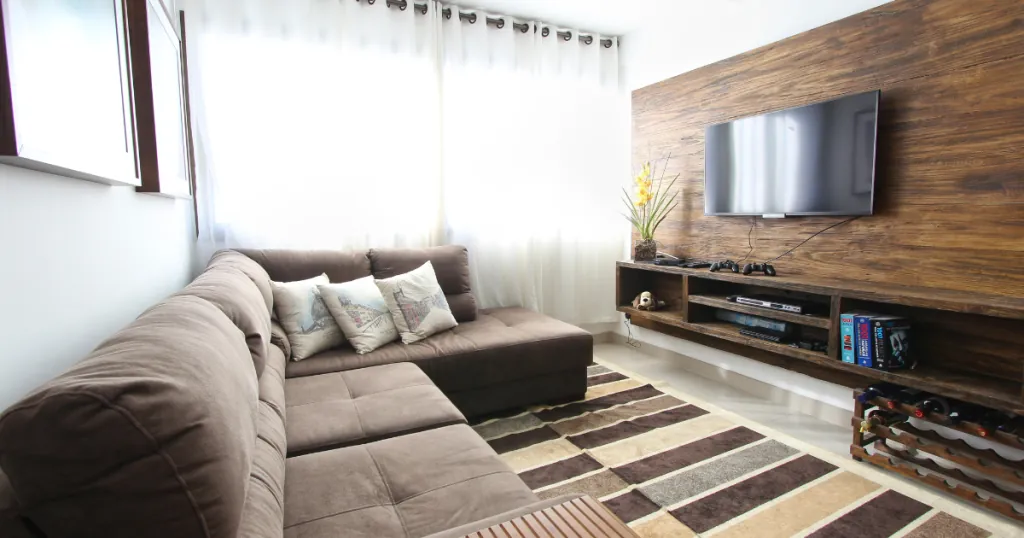
Sectionals take more patience, but the method is similar. If yours is modular, pull the sections apart first; our guide on how to separate a sectional sofa explains how the connectors work.
- Remove cushions and separate sections if they come apart.
- Start at the corner. With a one-piece L-shaped cover, line up the corner seam with the corner of the frame first, then work outward to each arm.
- Cover one section at a time. With a multi-piece set, fit each section's cover, then push the sections back together so the covers meet neatly.
- Fit the chaise last. Pull its cover over the end and smooth it toward the main seat.
- Tuck and secure. Push excess fabric into every crevice, add tuck grips and fasten the ties or clips.
- Replace cushions with their own covers and adjust everything once more after the first day of use.
For ideas on arranging a sectional once it is covered, see our sectional layout ideas.
How to keep a sofa cover from slipping
Covers slip because the size is wrong, the fabric is slippery, the sofa surface is smooth (leather is the worst), or the cover was not tucked and secured. Fixes, from simplest to most secure:
- Deep tucking: push the extra fabric well into the gaps between seat, back and arms, and fold any excess under the sofa.
- Foam tuck grips: foam rods pushed into the crevices hold the tucked fabric in place. A piece of pool noodle cut to length does the same job.
- Non-slip mats: a thin rug-grip mat under the seat section stops it sliding forward.
- Straps and clips: elastic straps under the frame, or the cover's own ties, hold the sides and skirt in place.
- Upholstery twist pins: spiral pins hold a cover to fabric upholstery very firmly, but only on fabric.
- Better fit: a multi-piece cover with separate cushion covers moves far less than a one-piece throw.
Keeping covers in place on leather
Leather is smooth, so covers slide easily. Choose a textured fabric such as microfiber, canvas or a cover with a non-slip backing; satin-like fabrics slide most. Use tuck grips, a non-slip mat under the seat and straps, but never pins, nails or adhesive tape, which leave permanent holes or marks.
Avoid: Leaving a cover on leather for months without checking. Dark dyes can transfer onto light leather, some rubber or vinyl backings can mark leather finishes, and trapped heat and moisture are not good for it. Test any mat on a hidden spot, take the cover off every few weeks, and keep the leather cleaned and conditioned.
Our guide on how to condition a leather sofa explains how to look after the leather underneath.
Washing and caring for slipcovers
- Follow the care label. Most stretch and polyester covers are machine washable; some cotton, linen and velvet covers need dry cleaning.
- Wash in cold water on a gentle cycle with mild detergent, and skip bleach.
- Air dry or tumble dry on low. Putting cotton covers back on while slightly damp helps them stretch into a snug fit.
- Vacuum the cover regularly and spot clean small spills with a mild detergent in between washes.
- Iron or steam on a low setting only if the label allows it, and keep sharp objects off the fabric.
Wash every few weeks with pets and kids, every few months otherwise. A well-kept cover usually lasts a few years before it loses its stretch or fades.
Alternatives: reupholstering or dyeing
If you love the sofa's shape and it is well built, changing the fabric itself may beat a cover.
| Option | Relative cost | Effort | Best when |
|---|---|---|---|
| Slipcover | Low | Low; reversible | You want protection or a quick change |
| Reupholstering | Medium to high; can approach the price of a new sofa | High; usually a professional job | The frame and springs are solid and you want a permanent new fabric |
| Dyeing | Low | Medium; results are hard to predict | Faded natural-fiber fabric that you want darker |
| Replacing the sofa | Highest | Low | The frame, springs or cushions are worn out |
Reupholstering a sofa
Reupholstering means stripping the old fabric and fitting new fabric to the frame. It makes sense when the frame is sturdy and the springs and cushions are still good; our sofa construction guide explains how to judge that. Choose a durable fabric with a high rub count, often listed as double rubs or Martindale; for everyday living room use, at least 15,000 double rubs is a common guideline.
The basic process: remove the old fabric piece by piece, photographing each step and keeping the pieces to use as patterns; check and repair padding and webbing; cut new pieces slightly larger than the old ones to allow for seams; then sew and staple the new fabric on, finishing with cushions, buttons and trim. It takes a heavy-duty sewing machine, upholstery thread, a staple gun and a lot of time, so DIY is realistic only with sewing and upholstery experience. Leather sofas can be reupholstered in fabric too, but that is a job for a professional upholsterer. Get several quotes, since prices vary widely by size and fabric.
Dyeing a faded sofa, including velvet
Dyeing can refresh a faded sofa, especially velvet, but results depend heavily on the fiber. Fabric dyes work best on natural fibers such as cotton and linen velvet. Polyester and many performance fabrics resist ordinary dyes, so check the fiber content first. You can only go darker or deepen the same color, never lighter.

- Clean and repair. Vacuum and spot clean the sofa, and fix any holes or tears first.
- Test a hidden area. Apply the dye to a small spot such as the back or under the skirt, let it dry and check the color, the texture and whether it rubs off on a white cloth.
- Apply evenly. Use a fabric dye or upholstery spray dye made for your fiber, following the package directions. Work in thin, even coats with a sponge, brush or sprayer, and do not soak the fabric, which can flatten velvet pile.
- Dry and assess. Let it dry completely, often several hours or overnight, then add another coat if needed.
- Finish. Vacuum, brush the pile to soften it, and check again for color transfer with a white cloth before using the sofa.
Spray dyes are quicker but can be less even; liquid dyes take more preparation but usually color more uniformly. Work in a well-ventilated room, and use a professional for valuable or delicate pieces. If the fabric is past saving, our guide on how long a sofa lasts can help you decide between repair and replacement.
Frequently asked questions
Do slipcovers work on leather sofas?
Yes, but they slide more easily. Choose a textured or non-slip-backed fabric, use foam tuck grips, a non-slip mat under the seat and straps, and never use pins. Take the cover off regularly so you can check for dye transfer and care for the leather.
How do I stop my couch cover from slipping?
Make sure it is the right size, tuck the extra fabric deep into the crevices, and hold it there with foam tuck grips. Add a non-slip mat under the seat and use the cover's straps or ties under the frame. Covers with separate cushion pieces slip much less.
Can you put a slipcover on a sectional with a chaise?
Yes. Buy a cover made for your configuration, or a set with one piece per section. Note which side the chaise is on as seen when facing the sofa, start fitting at the corner and work outward, and cover the chaise last.
Are sofa slipcovers machine washable?
Most stretch and polyester covers are. Cotton and linen may shrink, and velvet or some custom covers may need dry cleaning. Always follow the care label, wash in cold water on a gentle cycle and avoid high heat in the dryer.
Can a slipcover go on a reclining sofa?
Use a cover designed for recliners. These have separate sections for each seat and the footrest so the mechanism can open and close without catching the fabric.
Is it cheaper to reupholster or buy a slipcover?
A slipcover is almost always cheaper. Reupholstering costs more because of the fabric and labor, sometimes approaching the price of a new sofa, but it gives a permanent, fully tailored result on a well-built frame.
The right slipcover can protect a sofa for years and change the look of a room in an afternoon. To keep the upholstery underneath in good shape, read our guide on cleaning a fabric sofa and browse all of our sofa care and cleaning guides.
 Sofa Upholstery Fabrics Compared: Which One Is Right for You?Performance fabric, microfiber, velvet, linen, cotton and wool compared on durability, cleaning, pets and feel, with ratings and cleaning codes explained.
 How to Clean a Fabric Sofa: A Step-by-Step GuideClean a fabric sofa safely: read the W/S/WS/X code, vacuum, spot clean stains, steam clean only when safe, wash covers and pillows, and remove odors.
 How to Clean a Leather Sofa Without Damaging ItStep-by-step leather sofa cleaning: identify your leather, weekly care, deep cleaning, safe disinfecting, what never to use and how often to clean.
 Leather Sofa Stain Removal: Oil, Ink, Water, Gum, Odors and MoldHow to remove oil, ink, water marks, gum, blood and urine from a leather sofa, get rid of odors and mildew safely, and know when to call a pro.