To clean a fabric sofa, first check its cleaning code, then vacuum it thoroughly and treat spots with the right kind of cleaner: water-based for code W, solvent-based for code S, either for WS, and vacuum only for X. Blot rather than rub, test every product on a hidden spot first, and never soak the cushions.
With a weekly vacuum, prompt spot cleaning and a deeper clean about once a year, most upholstery stays fresh for years. Below is each step, including when steam cleaning is a bad idea and how to wash covers and pillows without shrinking them.
Key points
- The cleaning code on the tag (W, S, WS or X) tells you which cleaners are safe. Find it before you use anything.
- Blot spills right away, work from the outside of the stain inward, and apply cleaner to a cloth rather than straight onto the fabric.
- Steam and other water-based deep cleaning are only for W and WS fabrics, and only with light moisture.
- Removable covers are not always washable. Follow the care label, wash in cold water and air dry.
- Call a professional for X-code fabrics, velvet, silk, antiques and large or set-in stains.
In this guide
Start with the cleaning code
Most sofas have a tag with a cleaning code under a seat cushion, on the deck or under the frame. This letter matters more than the fiber name, because it reflects the fabric, dyes and finish together.
| Code | Meaning | Safe to use | Avoid |
|---|---|---|---|
| W | Water-based cleaners | Mild dish soap and water, upholstery shampoo, foam cleaners, enzyme cleaners | Solvents and dry-cleaning fluids |
| S | Solvent-based cleaners only | Water-free upholstery solvent or dry-cleaning solvent, rubbing alcohol after a test | Water, which can leave rings, shrink fibers or move dyes |
| WS or SW | Water or solvent | Either type, used sparingly | Soaking the fabric |
| X | Vacuum or brush only | Vacuuming and soft brushing | All liquid cleaners; call a professional for stains |
No tag? Treat it as code S and test carefully. For leather, see our guide to cleaning a leather sofa, because leather needs completely different products.
Common fabrics and how they behave
Polyester and microfiber
Durable and stain-resistant. Microfiber is often code S and can water-mark; rubbing alcohol on a white cloth, followed by brushing, usually cleans it well after a test.
Cotton and linen
Breathable and soft, but prone to shrinking, water rings and wrinkles. Use as little moisture as possible and never hot water.
Chenille and velvet
The pile crushes easily and can look patchy if rubbed. Blot gently, use minimal moisture, and brush in the direction of the pile when dry.
Performance fabrics
Olefin, acrylic and treated polyester blends are designed to release stains and many are code W. Still check the tag and the maker's care advice.
For a deeper comparison of how each fiber wears and cleans, see our guide to sofa upholstery fabrics.
What you need
- A vacuum with upholstery, soft brush and crevice tools
- White microfiber cloths (colored cloths can transfer dye) and a soft brush
- A spray bottle and distilled water, which helps avoid mineral rings
- Clear dish soap or an upholstery cleaner that matches your code; rubbing alcohol or solvent for S fabrics
- Baking soda for odors and an enzyme cleaner for pet accidents
Vacuum first, and vacuum often
Vacuuming is the most effective habit there is. Grit and crumbs work into the weave and act like sandpaper every time someone sits down, wearing the fabric and dulling the color.

- Remove the cushions. Take off seat and back cushions and throw pillows so you can reach the deck and crevices.
- Vacuum the frame. Use the crevice tool along seams, corners and the gap where the back meets the seat, where most debris collects.
- Vacuum every cushion side. Use the upholstery tool with short, overlapping strokes, including the sides and the zipper edge.
- Lift pet hair. A slightly damp rubber glove or a lint roller removes hair the vacuum misses.
- Fluff and rotate. Put the cushions back in a different position or flipped over so they wear evenly.
Aim for once a week, more with pets. Our pet-friendly sofa guide has more ideas for living with fur.
How to spot clean a fabric sofa
Speed matters: the sooner you act, the less a spill sets into the fibers and foam.
- Remove what you can. Scrape off solids with a spoon or dull knife and blot liquids with a dry white cloth. Press, do not rub, which spreads the stain and roughs up the fibers.
- Test first. Apply your cleaner to a hidden area, such as the back or under the skirt. Wait until it is dry and check for color change, rings or texture change. To check colorfastness, press a damp white cloth on the hidden spot: if dye comes off, call a professional.
- Mix a mild solution. For W and WS fabrics, about 1 teaspoon of clear dish soap in 2 cups (about 500 ml) of lukewarm water works for most fresh spills. For S fabrics, use a water-free upholstery solvent or rubbing alcohol.
- Apply to the cloth, not the sofa. Dampen a white cloth and dab the stain, working from the outer edge toward the center so it does not spread.
- Rinse lightly. On W fabrics, dab with a cloth dampened in plain water to remove soap residue, which otherwise attracts dirt.
- Blot dry and feather the edges. Press with a dry towel, then lightly dampen the area just around the spot and blot again so it dries without a hard ring.
- Brush when dry. Once fully dry, brush the pile gently to restore its texture.
Treating common stains
| Stain | What to do | Avoid |
|---|---|---|
| Grease and oil | Sprinkle cornstarch or baking soda while the stain is fresh, leave it 15–30 minutes to absorb the oil, vacuum, then treat any mark with dish soap solution (W) or solvent (S) | Water alone, which spreads oil |
| Ink | Dab with rubbing alcohol on a white cloth, changing to a clean area as ink lifts; works on many W, S and WS fabrics after a test | Rubbing, and alcohol on X-code or delicate fabrics |
| Red wine, coffee, juice | Blot, then dab with cool water and a little dish soap (W) or solvent (S); repeat and rinse | Salt and other kitchen tricks that can leave residue; hot water |
| Blood, milk, vomit | Cold water and dish soap, or an enzyme cleaner on W fabrics | Heat and hot water, which set protein stains |
| Pet urine | Blot thoroughly, then use an enzyme cleaner made for upholstery on W fabrics and let it work as directed | Ammonia-based cleaners, which smell like urine to pets |
Avoid: Bleach, strong household sprays, scrub brushes and soaking the fabric. Too much liquid soaks into the foam, takes days to dry, can leave a brown water ring and may lead to mildew.
Deep cleaning and steam cleaning
Even with good habits, body oils and fine dust build up. A deep clean about once a year, or every six months with pets or kids, keeps the color brighter. You can use an upholstery shampoo by hand, a portable upholstery extractor that sprays and sucks the water back out, or a steam cleaner.
When steam cleaning is safe, and when it is not
Steam is water, so it follows the rules for water-based cleaners. It refreshes tired fabric without harsh chemicals, but not every sofa can take it.
Steam can work on
- W and WS fabrics
- Synthetic blends such as polyester and many performance fabrics
- Sofas that are dingy overall rather than stained in one spot
Do not steam
- S and X fabrics
- Leather and faux leather, silk, and most velvets
- Cotton or linen that may shrink, unless the maker says it is safe
- Protein stains such as blood, which heat can set
A handheld garment steamer only adds heat and moisture; it does not remove dirt. For deep cleaning, use an extractor or upholstery steam cleaner with suction. Renting suits a once-a-year clean; buying pays off with pets or frequent spills.
- Vacuum thoroughly. Loose dirt turns into mud once it is wet.
- Pre-treat stains. Spot clean noticeable marks first with a cleaner that suits the code.
- Test a hidden area. Let it dry fully and check for shrinking, color change or rings.
- Use the upholstery tool. Fill the machine per the instructions and let it heat up.
- Work in small sections. Use light, overlapping passes and keep the tool moving. Do not over-wet the fabric.
- Blot as you go. Press a dry towel on each section to pull out extra moisture.
- Dry completely. Open windows and run a fan. Stay off the sofa until it is fully dry, which can take a few hours to a full day; sitting on damp fabric crushes the pile and can leave a musty smell.
Washing cushion covers
A zipper does not mean a cover is machine washable; many zippers are only there so the factory can insert the foam. Check the care label first, because a cover that shrinks even slightly may never fit again.
If the label allows washing:
- Zip the covers closed and turn them inside out to protect the surface.
- Wash all covers from the same sofa together, so the color fades evenly and the cushions keep matching.
- Use cold water, a gentle cycle and a mild detergent. Skip bleach and fabric softener, which can leave a residue that attracts dirt.
- Air dry, or tumble on the lowest heat setting only if the label permits.
- Put covers back on while they are still slightly damp. The fabric stretches more easily and settles into shape as it dries.
- If the label allows ironing, use a low setting on the reverse side.
Dry cleaning is the alternative for covers marked "dry clean only," for delicate fabrics and for heavy soiling.
| Washing at home | Professional dry cleaning | |
|---|---|---|
| Cost | Low | Higher |
| Convenience | Do it any time | Drop-off and pick-up, so the sofa is bare for a few days |
| Risk | Shrinking, fading or rough texture if the fabric is not washable | Lower risk of shrinking and color loss |
| Best for | Washable cotton, polyester and performance covers | Dry-clean-only covers, delicate fabrics, deep-set stains |
What about the cushion foam?
Never machine wash or submerge foam inserts. Foam holds water, is hard to rinse and can take days to dry, risking mildew and crumbling. Vacuum the inserts, freshen them with baking soda and air them in the shade. If a spill soaked through, flush just that spot with a little soapy water, press it out with towels and let it dry fully before refitting the cover.
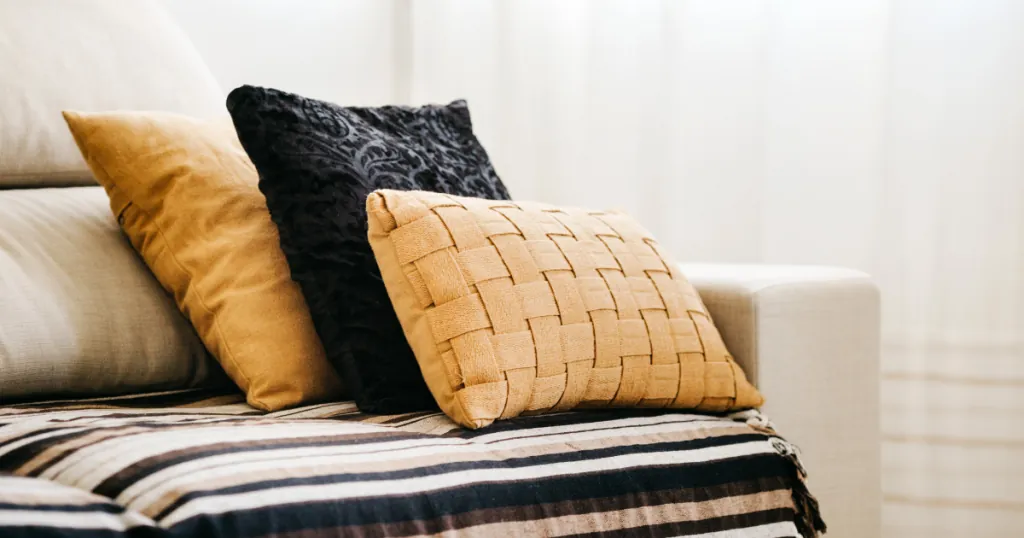
How to wash throw pillows
Throw pillows collect dust, skin oils and pet hair quickly. Clean them every three to six months, or more often with heavy use.
- Read the care label. It tells you whether the cover, the insert or both can be washed, and at what temperature.
- Vacuum both sides. Use the soft brush attachment and pay attention to seams and corners.
- Check for stains and colorfastness. Rub a damp white cloth on a hidden seam. If no color transfers, pre-treat stains with a gentle stain remover or a mild soap solution.
- Remove covers if possible. Wash covers separately from inserts; they need different care.
- Wash gently. Use a gentle cycle in cold water with mild detergent. For hand washing, swish the pillow in a tub of lukewarm soapy water, then rinse well in cool water. Washing two pillows at a time keeps the machine balanced.
- Dry thoroughly. Polyester-fill and feather pillows can usually tumble dry on low with a few dryer balls to stop clumping; down may need several cycles. Air-dry anything marked as such, turning it often and using a fan if needed.
- Fluff. Once completely dry, plump the pillows by hand to restore their shape. Any dampness left inside can cause mildew.
Spot clean only pillows with foam inserts, beading or delicate trims.
Removing odors
Lingering smells usually come from body oils, food, pets or trapped moisture. To freshen the sofa:
- Vacuum thoroughly, then sprinkle baking soda over the dry fabric. Leave it for at least 30 minutes, or overnight for stronger smells, and vacuum it up completely.
- Air the cushions outside in the shade on a dry day, or near an open window.
- Use an enzyme cleaner for urine or vomit odors on W fabrics; masking sprays only hide a smell for a while.
- Check the deck under the cushions for a forgotten spill.
Keep it clean longer
- Rotate and fluff cushions weekly so they wear evenly.
- Limit sun: direct sunlight fades and weakens fabric; use curtains or blinds.
- Use a fabric protector if it suits your code, after testing it on a hidden spot.
- Cover up: a washable throw or fitted cover protects favorite seats; see our sofa slipcover guide.
- House rules: coasters, eating at the table and no shoes on the sofa all prevent stains.
Tip: Keep a small cleaning kit by the sofa: two white cloths, a spray bottle and a note of your cleaning code. Most stains are easy to remove in the first few minutes and much harder after they dry.
When to call a professional
Professionals have extraction equipment and solvents that are hard to match at home. Call one when:
- The fabric is code X, silk, velvet, antique or very expensive.
- A stain has set, keeps coming back, or you have already tried one method without success.
- There are large pet accidents, smoke or water damage, or signs of mildew.
- Your sofa's warranty requires professional cleaning for stain claims.
Tell them your cleaning code, ask which method they use, and compare a few quotes. Regular care like this is one of the main factors in how long a sofa lasts.
Frequently asked questions
How often should I clean a fabric sofa?
Vacuum weekly, treat spills immediately, and deep clean about once a year. Homes with pets, kids or heavy daily use benefit from a deep clean every six months. Wash removable covers and throw pillows every three to six months if their labels allow it.
Can I use a carpet cleaner on my sofa?
Only on W or WS fabrics, and only with an upholstery attachment and light moisture. Carpet machines put down a lot of water, which can soak the cushion foam and leave rings. Test a hidden area first.
Can I use vinegar to clean a fabric sofa?
A diluted vinegar solution can help with some odors and residue on W-code fabrics, but it can affect certain dyes and leaves a smell until it dries. Test it on a hidden spot first, and never use it on S or X fabrics.
How do I get rid of water stains on a fabric sofa?
Water rings usually form when the edge of a wet area dries faster than the middle. On W fabrics, lightly dampen the whole panel evenly with distilled water, blot, and let it dry with a fan. On S fabrics, use a solvent cleaner, or call a professional.
Can I put sofa cushion covers in the washing machine?
Only if the care label says they are washable. If so, wash all covers together on a cold, gentle cycle, air dry them, and put them back on while slightly damp. Never wash the foam inserts in a machine.
Know your code, vacuum often, blot spills fast and keep moisture to a minimum, and a fabric sofa will look good for years. For more care advice, browse our sofa care and cleaning guides or weigh up materials in leather vs fabric sofas.
 Sofa Upholstery Fabrics Compared: Which One Is Right for You?Performance fabric, microfiber, velvet, linen, cotton and wool compared on durability, cleaning, pets and feel, with ratings and cleaning codes explained.
 Sofa Slipcover Guide: How to Choose, Measure and Fit a CoverChoose and fit a sofa slipcover: stretch, fitted and sectional covers, how to measure, stopping covers slipping on leather, plus reupholstery and dyeing.
 How to Clean a Leather Sofa Without Damaging ItStep-by-step leather sofa cleaning: identify your leather, weekly care, deep cleaning, safe disinfecting, what never to use and how often to clean.
 Leather Sofa Stain Removal: Oil, Ink, Water, Gum, Odors and MoldHow to remove oil, ink, water marks, gum, blood and urine from a leather sofa, get rid of odors and mildew safely, and know when to call a pro.