The best sofas for pets are covered in tightly woven, smooth materials that claws cannot hook into and hair cannot cling to: microfiber, performance fabrics, synthetic velvet and protected (pigmented) leather are the most reliable choices. Avoid loose weaves, looped textures such as bouclé, and delicate aniline leather, which scratches and stains easily.
Material is only half the story. Color, removable covers, cushion design and a simple cleaning routine decide whether a sofa still looks good after a few years with a dog or cat. This guide walks through each choice.
Key points
- Look for a tight weave with no loops. If you can easily push a fingernail between the threads, a claw will snag it.
- Leather wipes clean and does not hold hair, but it does show scratches. Choose pigmented (protected) leather over aniline.
- Pick a color close to your pet's coat, or a mid-tone with a subtle pattern, to hide hair between cleanings.
- Removable, washable covers and reversible cushions make accidents far easier to deal with.
- Training, trimmed nails and a scratching post near the sofa protect it better than any fabric.
In this guide
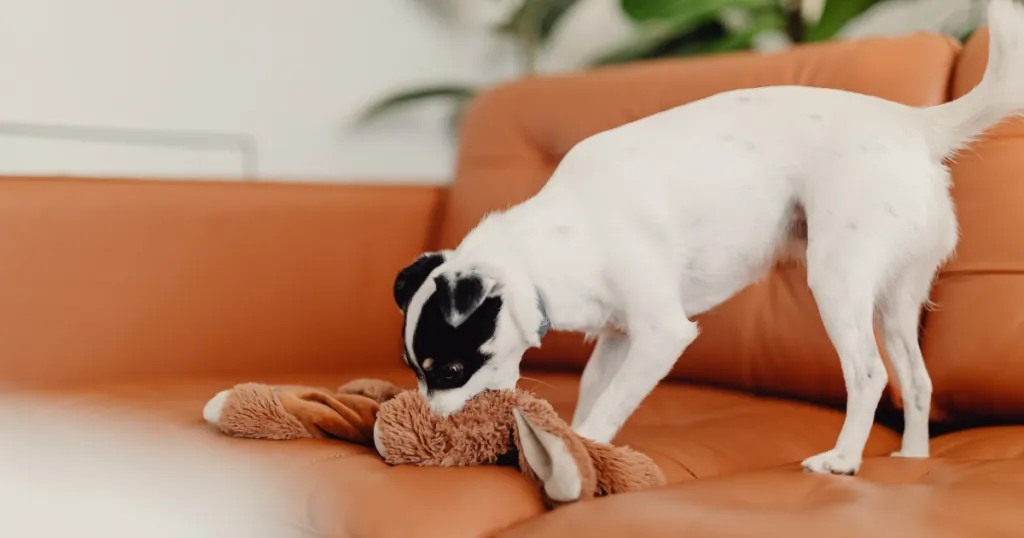
What makes a sofa pet-friendly?
Pets are hard on furniture in a few predictable ways: claws snag and puncture, hair and dander collect in the fabric, paws bring in dirt, and the occasional accident soaks into the cushions. A pet-friendly sofa handles all of these.
- No loops or loose threads. Claws catch on loops and pull them out. Flat, tight weaves and smooth surfaces are safest.
- Easy hair removal. Smooth or short-pile surfaces let you wipe, brush or vacuum hair away quickly.
- Cleanability. Fabric that tolerates water-based cleaners, or covers you can remove and wash, makes accidents manageable.
- Forgiving color. Mid-tones and subtle patterns hide hair and small marks.
- Solid build. Dogs jump on and off. A sturdy frame and good suspension handle that better.
Best upholstery materials for dogs and cats
No material is pet-proof, but some are far more forgiving than others. The table compares the common options.
| Material | Claws | Hair | Stains and odors | Verdict |
|---|---|---|---|---|
| Microfiber / microsuede | Good: very tight weave, few snags | Good: wipes or brushes off | Good, but some show water rings; check the cleaning code | One of the best all-round choices |
| Performance fabric (polyester, olefin, solution-dyed acrylic) | Good if tightly woven | Good | Very good: made to resist spills | Excellent for families with pets |
| Synthetic velvet (short, tight pile) | Good: no loops to catch | Fair: hair shows but lifts off with a brush | Fair to good | Surprisingly good with cats |
| Canvas, denim, cotton duck | Fair | Fair | Good when used as a washable slipcover | Practical as removable covers |
| Pigmented (protected) leather | Fair: scratches show, but rarely snag | Excellent: wipes off | Very good: surface resists spills and odors | Very good for dogs; fair for cats that scratch |
| Aniline leather | Poor: marks easily | Excellent | Poor: absorbs oils and liquids | Avoid with active pets |
| Faux leather (PU, PVC) | Poor: claws puncture it | Excellent | Good | Fine for calm pets, not for scratchers |
| Linen, chenille, tweed, bouclé, loose wool weaves | Poor: loops and loose threads snag | Poor: hair weaves in | Fair to poor | Avoid |
For more detail on each fabric, see our comparison of sofa upholstery fabrics.
Dogs vs cats: different risks
Dogs mostly bring dirt, oils from their coat, drool and the occasional dig or chew. Smooth, wipeable surfaces suit them well, which is why leather is a popular choice for dog owners. Cats are more likely to scratch and knead, so the priority is a surface with nothing for claws to hook into: microfiber, tight synthetic velvet and performance weaves usually do better than leather with a determined scratcher.
Is a leather sofa good for pets?
Leather has a lot going for it in a home with dogs. Hair sits on the surface instead of weaving into it, so a damp cloth or a quick vacuum removes it. Protected leather does not trap dander and odors the way many fabrics do, and spills bead up long enough to wipe away. It also has no loops for claws to snag.
Pros
- Hair and dander wipe off easily.
- Holds odors less than most fabrics.
- No threads to snag or pull.
- Good quality leather lasts many years and develops a patina.
- Small scratches on some leathers can be softened or repaired.
Cons
- Nails and claws leave visible scratches, especially on light or aniline leather.
- Cat claws can puncture it.
- Feels cold in winter and can be sticky for pets in summer.
- Oils from a dog's coat can darken unprotected leather over time.
- Chewing damage is hard to hide.
The type of leather matters most. Pigmented, or protected, leather has a colored finish that resists stains and hides fine scratches. Semi-aniline is a middle ground. Full aniline leather looks beautiful but marks at the slightest touch, and bonded leather tends to peel. Our guide to leather sofa types explains the differences, and leather vs fabric sofa compares the two on cost, comfort and wear.
Faux leather is a different case. It wipes clean like real leather, but once a claw punctures the surface it cannot be buffed out, and cheaper PU can peel. See our faux leather sofa guide before buying one for a home with pets.
Colors and patterns that hide pet hair
The simplest trick is to match the sofa to your pet. A cream sofa with a black Labrador, or a charcoal one with a white cat, will show every hair within hours.
- Match the coat. Choose a shade close to your pet's main coat color.
- Go mid-tone. Taupe, mushroom, mid-gray, olive and camel hide both light and dark hair better than black or white.
- Add subtle texture or pattern. A heathered, flecked or printed fabric disguises hair and small marks. Make sure the texture comes from color, not from loops.
- Avoid very dark solids with light-coated pets and very light solids with dark-coated ones.
Design features to look for
Removable covers
Zippered cushion covers or a fully slipcovered sofa let you wash away accidents. Check the care label: some covers are dry clean only.
Reversible cushions
Loose seat cushions that can be flipped and rotated spread wear and hide a stain until you can treat it.
Simple surfaces
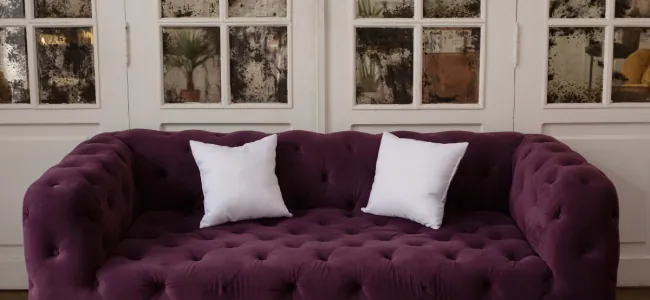
Deep button tufting and channels collect hair, and buttons can be chewed off. Plain backs and seats are easier to clean.
Sensible legs
Raised legs make vacuuming underneath easy. Very low gaps collect toys and hair; a skirt can hide them but also gets dirty and chewed.
A sturdy, kiln-dried hardwood or engineered frame and good seat springs also matter if large dogs jump onto the sofa daily.
How to clean a sofa when you have pets
A short, regular routine keeps hair and odors from building up. Always check the cleaning code on the label first: W means water-based cleaners, S means solvent-based only, WS means either, and X means vacuum only.
- Remove hair weekly. Vacuum with an upholstery or pet-hair tool. Between vacuums, a slightly damp rubber glove or a lint roller pulls hair off fabric quickly.
- Vacuum the crevices. Lift the cushions and use the crevice tool along the seams and under the cushions, where hair and crumbs collect.
- Blot accidents at once. Press with paper towels to absorb as much as possible. Do not rub, which spreads the stain into the fibers.
- Use an enzyme cleaner for urine and vomit. Enzyme cleaners break down the proteins that cause lingering odor and attract pets back to the same spot. Test in a hidden spot first and follow the product label.
- Wipe leather gently. Use a soft cloth dampened with water, or a cleaner made for leather, then dry it. Condition protected leather a few times a year.
- Deal with odors. On W or WS fabrics, a light sprinkle of baking soda left for 15–30 minutes and then vacuumed can freshen the surface. Do not use it on leather.
Avoid: ammonia-based cleaners on pet accidents. Urine contains ammonia compounds, so the smell can encourage a pet to mark the same spot again. Also avoid harsh household sprays on leather.
If urine has soaked into the foam, surface cleaning is rarely enough; a professional upholstery cleaner or replacing the cushion insert may be needed. Our guides on how to clean a fabric sofa and how to clean a leather sofa cover every method in detail.
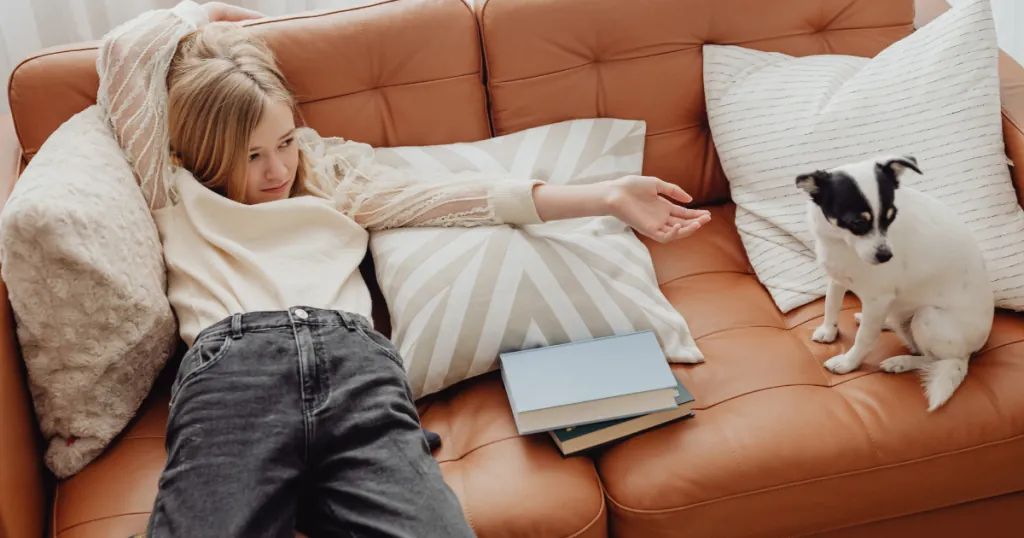
How to protect your sofa from pets
Even the toughest fabric lasts longer with a few habits in place.
- Use a washable throw or pet cover. Put it where your pet likes to lie. Covers with a non-slip backing stay in place better, especially on leather. Our sofa slipcover guide explains the options.
- Give pets their own spot. A comfortable bed next to the sofa often wins over the cushions, especially if it smells like you.
- Offer a better place to scratch. Put a sturdy scratching post right beside the sofa arm a cat targets. Double-sided tape on the arm for a few weeks can discourage the habit.
- Keep nails trimmed. Short nails cause far fewer scratches and punctures on leather and fabric.
- Teach an "off" cue. Consistent, reward-based training keeps dogs off the sofa or limits them to one covered seat.
- Prevent chewing. Provide plenty of chew toys, especially for puppies, and do not leave young dogs alone with the sofa until the habit is under control.
- Wipe paws after walks. A towel by the door keeps mud and oils off the upholstery.
When damage happens
Light scratches on aniline or semi-aniline leather can often be softened by rubbing gently with a clean finger or a little leather conditioner. Deeper scratches and small punctures can be filled with a leather repair kit, and a professional leather technician can repair and recolor larger areas. Read our leather sofa repair guide for step-by-step methods, and test any product on a hidden spot first.
On fabric, never pull a snagged thread. Push a loop back into the weave with a blunt needle, or trim a loose end flush with sharp scissors. For heavier damage, a well-fitted slipcover or reupholstering is often cheaper than replacing the whole sofa.
Frequently asked questions
What is the best couch material for dogs?
Protected (pigmented) leather, microfiber and performance fabrics are the most practical. They release hair easily and handle spills well. Avoid loose weaves and delicate aniline leather.
What is the best sofa fabric for cats?
Choose a tight, smooth surface with nothing for claws to hook into, such as microfiber, microsuede or a short-pile synthetic velvet. Looped fabrics like bouclé and loose weaves like linen are easily snagged.
Is leather or fabric better with pets?
Leather is easier to keep free of hair and odors, but it shows scratches. A tightly woven synthetic fabric hides minor wear better and resists claws, but it needs more vacuuming. Many dog owners lean toward leather; many cat owners lean toward microfiber.
Do cats scratch microfiber sofas?
They can, but microfiber's dense weave gives claws little to grip, so most cats find it unsatisfying to scratch and it rarely snags. A scratching post next to the sofa helps a lot.
How do I get dog smell out of a couch?
Vacuum thoroughly, wash any removable covers, and treat specific spots with an enzyme cleaner. On W or WS fabrics, baking soda left for 15–30 minutes and vacuumed off can help. Persistent odors in the foam may need professional cleaning.
Are slipcovered sofas good for pets?
Yes. A slipcover in a durable, washable fabric such as cotton canvas or a performance weave can be taken off and laundered after accidents, which makes it one of the easiest options to live with.
A pet-friendly sofa is mostly about smart material choices and easy cleaning. For more help, browse our sofa care and cleaning guides, or see how to tackle specific marks in our guide to leather sofa stain removal.
 Sectional vs Sofa: Which Is Right for Your Living Room?Sectional or a standard sofa? Compare floor space, seating, room layout, moving and cost, with measurements and a simple checklist to decide.
 Sofas for Small Spaces: How to Choose One That FitsHow to pick a sofa for a small living room or apartment: the right size, arm and leg styles, depth, colors, sleeper and modular options, and what to avoid.
 How to Measure for a New Sofa (Room, Doorways and Stairs)Measure your room, doorways, hallways and stairs before buying a sofa. Step-by-step instructions, clearances and the diagonal-depth test for tight doors.
 What Makes a Good Sofa? Frame, Springs and Cushions ExplainedHow to judge sofa quality: frame materials and joints, spring systems, foam density and cushion fills, plus quick tests you can do in a showroom.