A reclining sofa combines the seating of a sofa with the comfort of a recliner: the back tilts and a footrest lifts at the touch of a lever or button. It is ideal for watching TV and for anyone who likes to put their feet up, but it needs more planning than a standard sofa. This guide explains the types, the space you need and the details that make the difference.
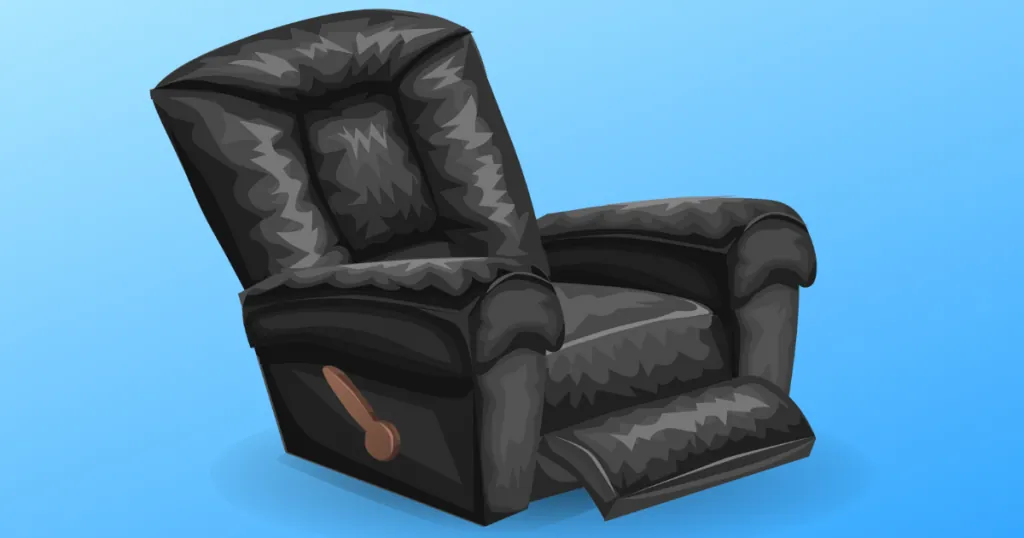
Manual or power?
| Manual | Power | |
|---|---|---|
| How it works | Pull a lever or push back with your body | Buttons or a switch move the seat smoothly |
| Positions | Usually two or three fixed positions | Any position you like |
| Ease of use | Needs some strength; levers can be hard to reach | Very easy, also for people with limited mobility |
| Electricity | Not needed; can stand anywhere | Needs a socket nearby or a rechargeable battery pack |
| Price | Lower | Higher |
| Maintenance | Few parts to fail | Motors and switches can fail; check the warranty |
Many power recliners add extras: a power headrest that tilts forward so you can watch TV while reclined, power lumbar support, and USB ports in the arm. Some have a battery backup so the seat can return to upright during a power cut.
How much space does it need?
A reclining sofa needs room behind it for the back to tilt and in front of it for the footrest.
- Standard recliners need about 12 inches (30 cm) or more between the back and the wall.
- Wall-hugger or zero-wall recliners slide forward as they recline. They often need only 4 to 6 inches (10–15 cm) of space behind them, which makes them the best choice for smaller rooms.
- Fully reclined depth is often 60 to 70 inches (152–178 cm). Check the exact number on the product page and keep a walkway behind the footrests if people need to pass.
Mark both the upright and fully reclined footprint on the floor with tape before you buy. Our guide on how to measure for a sofa explains the other measurements, including doorways.
Which seats recline?
On many reclining sofas only the two outer seats recline, and the middle seat is fixed or folds down into a console with cup holders and storage. If you want every seat to recline, check the description carefully. On sectionals, the corner seat usually does not recline.
Comfort checks
- Fit for your height. When reclined, your head should rest against the headrest and your calves, not just your heels, should be supported by the footrest.
- Seat height and depth. A seat height of about 18 to 20 inches (46–51 cm) makes getting up easier.
- Gap between seat and footrest. A large gap feels uncomfortable under the knees; some models have a filler cushion.
- Noise. Power mechanisms should run quietly and smoothly.
Upholstery for recliners
Reclining sofas get a lot of movement in the same places, so upholstery needs to be durable. Protected leather and durable fabrics such as microfiber or performance fabric are common choices. Be careful with very cheap faux leather and bonded leather: the constant flexing can make them crack. Compare the options in leather vs fabric.
Mechanism and warranty
The reclining mechanism is the part most likely to need repair. Look for a steel mechanism and a separate warranty on the mechanism and, for power models, on the motor and electronics. Ask whether replacement parts (switches, power supplies) are available. The frame matters too: see our sofa construction guide.
Practical tips
- Plan where the cable for a power recliner will run; a battery pack avoids cables across the floor.
- Keep children and pets clear of the mechanism when reclining or closing.
- Check that the sofa can be split into sections or that the backs can be removed for delivery.
- Need storage behind a reclining sofa? See storage ideas behind a reclining sofa, and for more comfort ideas, relax in style with a recliner sofa.