The easiest way to decorate around a leather sofa is to treat it as the anchor of the room, then soften it with texture and pick two or three colors that suit its shade. Black leather loves crisp contrast, brown and cognac leather glow next to earthy and cool colors, burgundy looks richest with neutrals and warm metals, and white leather needs warmth from wood and textiles.
Because leather is smooth and visually strong, the rest of the room should add what it lacks: softness, pattern and layered light. This guide covers color pairings for each popular leather shade, then rugs, pillows, accent chairs, lighting and the mistakes to avoid.
Key points
- Let the leather set the palette: warm leathers (brown, cognac, burgundy) and cooler ones (black, gray, white) suit different colors.
- Use the 60-30-10 rule: about 60% main color (usually walls), 30% secondary color (sofa, rug, curtains) and 10% accents.
- Balance smooth leather with soft textures such as wool, linen, velvet, bouclé and knits.
- Accent chairs should complement, not copy the sofa: a fabric chair in a related color usually works better than a second leather piece.
- Layer warm light and keep leather out of strong direct sun, which fades and dries it.
In this guide
- Start with your sofa's color and undertone
- Decorating with a black leather sofa
- Brown, tan and cognac leather sofas
- Burgundy and oxblood leather sofas
- White, cream and gray leather sofas
- Rugs, pillows and throws
- Choosing accent chairs for a leather sofa
- Lighting and finishing touches
- Common decorating mistakes to avoid
- Frequently asked questions
Start with your sofa's color and undertone
Every leather has an undertone. Brown, tan, cognac and burgundy lean warm, with red, orange or yellow in them. Black, charcoal, gray and bright white lean cool or neutral. Colors with a similar temperature feel calm and harmonious together, while a contrasting temperature adds energy. Neither is wrong; just choose on purpose.
Basic color theory helps here. Complementary colors sit opposite each other on the color wheel and create bold contrast, such as blue with a cognac sofa. Analogous colors sit side by side and feel harmonious, such as rust and mustard with tan leather. Triadic schemes use three evenly spaced colors for a balanced, lively look. Pick one approach, then apply the 60-30-10 split so the room does not feel busy.
| Sofa color | Wall colors | Accent colors | Metals and woods |
|---|---|---|---|
| Black | Warm white, soft gray, greige, pale sage | Red, mustard, emerald, blush, cobalt | Brass, chrome, light oak, walnut |
| Brown and chocolate | Cream, warm beige, sage, soft blue | Teal, navy, olive, rust, burnt orange | Brass, black iron, medium woods |
| Tan and cognac | White, light greige, dusty green, deep navy | Denim blue, olive, terracotta, cream | Matte black, brass, light oak, rattan |
| Burgundy and oxblood | Ivory, warm gray, beige, deep green | Gold, plum, forest green, navy | Gold, brass, dark walnut |
| White and cream | Soft white, warm gray, pale taupe | Sage, soft blue, camel, black accents | Light woods, brushed nickel, brass |
| Gray | White, pale blue-gray, warm greige | Mustard, blush, navy, emerald | Chrome, black, oak |
Decorating with a black leather sofa
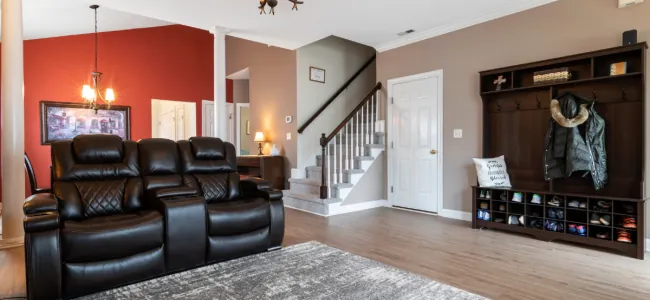
A black leather sofa is a classic statement piece that fits modern, minimalist and industrial rooms especially well, and it can be dressed up or down with pillows and throws. Its strength is contrast, so give it a light background: white, soft gray, greige or beige walls keep the room from feeling dark.
- Add color in small doses. Black makes bold accents pop. Red, mustard yellow or emerald green pillows, a colorful rug or a single piece of art bring the room to life.
- Bring in texture. A shaggy or high-pile rug, a chunky knit or woven throw and linen or velvet pillows stop the sofa from looking flat and hard.
- Lighten the floor. A pale rug under a black sofa makes it look lighter and frames the seating area.
- Mix materials. Pair the leather with warm wood, brass or glass so the room does not feel cold.
Black leather hides stains well, but light-colored dust and pet hair show on it, so a quick wipe with a soft, slightly damp cloth keeps it looking sharp.
Brown, tan and cognac leather sofas
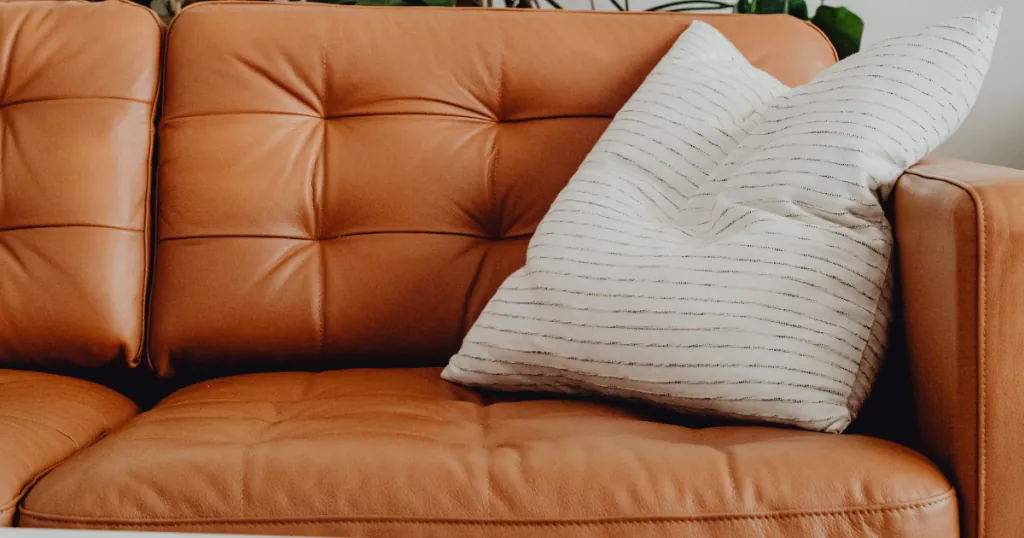
Brown leather is the most versatile leather of all, and almost any palette can work if you balance it. These four color families are the easiest to live with:
Neutrals
White, cream, beige, gray and black give a calm backdrop that lets the warm leather stand out. Add texture so the room does not look flat.
Earthy tones
Olive green, rust, terracotta and ochre are drawn from nature and echo the leather's warmth. Ideal for a cozy, relaxed room.
Warm brights
Red, orange and yellow add energy. Use them in pillows, art or a single chair, balanced by plenty of neutrals.
Cool colors
Blue, teal, green and plum balance brown's warmth. Navy or deep teal walls behind a cognac sofa are a striking pairing.
To create a focal point, put the boldest color in one place: a statement wall, a large artwork or a colorful accent chair. Then repeat that color two or three times in smaller items, such as a pillow, a vase or a book stack, so it feels intentional. Above all, choose colors you love; the right palette is the one that makes the room feel like home.
Is a brown leather sofa outdated?
No. Brown leather has been a staple for generations, and warm cognac and tan shades remain popular. What can look dated is the room around it: all-matching brown furniture, heavy dark curtains and little contrast. Instead of replacing a good sofa, refresh what surrounds it:
- Add velvet. Velvet pillows or a velvet ottoman in a jewel tone add richness and a current look.
- Bring in natural materials. Wood, stone, rattan, jute and linen add warmth and texture.
- Be braver with color. A colored accent wall or bold pillows instantly modernize the room; balance them with neutrals.
- Mix styles. Pair the leather sofa with vintage side tables, a modern lamp or a fabric chair rather than a matching set.
- Play with pattern. Geometric or floral pillows and a patterned rug work well against plain leather. If the rug is busy, keep the pillows solid, and vice versa.
- Add statement lighting. A sculptural floor lamp or pendant gives the room a new focal point.
Burgundy and oxblood leather sofas
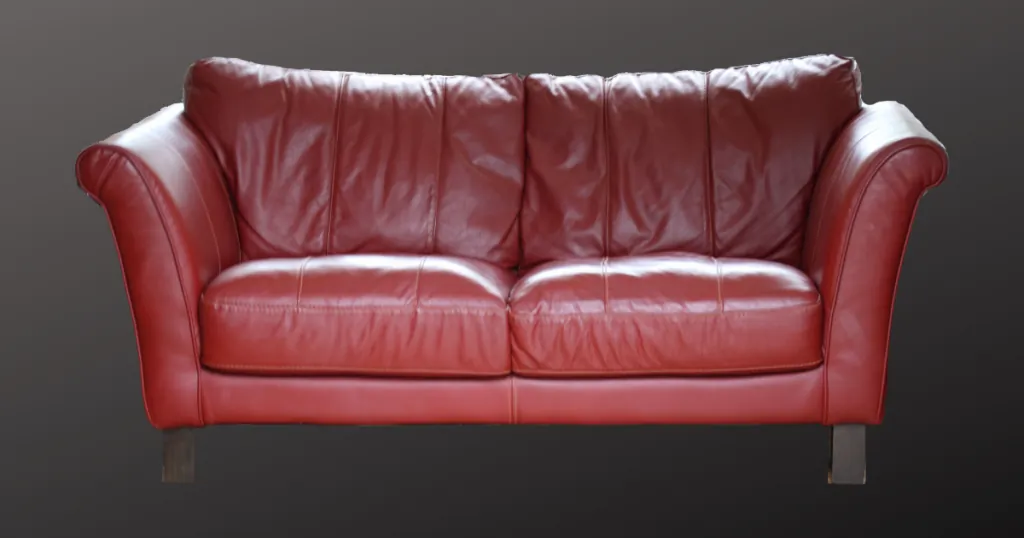
Burgundy leather is bold, so the rest of the room should support it rather than compete. Choose the sofa's size and style to suit the room first: a sleek modern shape feels chic, while a tufted traditional style feels cozy and classic.
- Neutrals first. White, ivory, beige and warm gray walls and large pieces give burgundy room to stand out.
- Warm metals. Gold, brass or antique bronze in lamps, frames and small objects bring out the richness of the red.
- Coordinating textiles. Throws and pillows in deeper reds, plum or earth tones feel cozy; forest green or navy adds contrast.
- Patterns with purpose. A rug, pillows or curtains with a pattern that picks up the burgundy tie the room together.
- Art and objects. Bold abstract pieces and traditional landscapes both suit burgundy. Glass, metal and wood objects reflect light and keep the room from feeling heavy.
- Window treatments. Heavy velvet drapes add depth in a formal room, while sheer curtains let daylight in and keep things airy.
White, cream and gray leather sofas
A white or cream leather sofa feels fresh, airy and modern, but it can look cold or clinical if everything around it is also white. Add warmth with light or medium wood, woven baskets, a textured wool rug and pillows in camel, sage or soft blue. A few black accents, such as a picture frame or lamp base, give the room definition. Keep white leather away from dark, unsealed denim and dyed fabrics, which can transfer color; our white leather sofa care guide explains how to keep it bright.
Gray leather sits between warm and cool. It suits contemporary rooms and pairs well with white walls, mustard or blush accents, and either chrome or warm oak. Beige leather is another flexible neutral that works with pastels as well as bolder colors and patterned accents.
If you prefer something more daring, leather also comes in bold colors such as red, green and blue, and in two-tone designs. These work best as the single star of the room, with the walls, rug and other furniture kept calm so the colors do not clash.
Rugs, pillows and throws
Textiles do more than anything else to make a leather sofa feel inviting. They add softness, warmth and color, and they are easy to change with the seasons.
- Ground it with a rug. Choose a rug large enough for at least the front legs of the sofa and chairs to sit on it; in many living rooms that means about 8 × 10 ft (2.4 × 3 m). Ideally it extends 6–8 in (15–20 cm) beyond each end of the sofa. Wool, jute or a high-pile rug contrasts nicely with smooth leather.
- Pick a pillow palette. Choose two or three colors from your scheme. On a standard three-seat sofa, two to four pillows of 18–22 in (45–56 cm) usually look balanced.
- Mix textures. Combine at least two textures, for example linen with velvet, or a knit with a smooth cotton. Avoid too many slippery fabrics, which slide off leather.
- Balance pattern. Use one larger pattern and one smaller one, plus a solid. If the rug is patterned, keep the pillows simpler.
- Drape a throw. A chunky knit, wool or faux fur throw over one arm or the back adds comfort, especially in winter when leather feels cool.
Tip: Place the coffee table about 14–18 in (36–46 cm) from the sofa, and choose one roughly 1–2 in (2.5–5 cm) lower than the seat. Our coffee table height guide has the details.
Choosing accent chairs for a leather sofa
The right accent chair ties a room together and adds extra seating. It should relate to the sofa in style, color or scale, without being an exact copy. If you are not sure what style your sofa is, our sofa styles guide explains the main shapes.
Classic or Chesterfield sofa
Wingback chairs, club chairs or a tufted fabric armchair suit traditional leather. Patterned upholstery or velvet keeps the look rich but not heavy.
Modern sofa
Choose clean lines: an armless slipper chair, a chair with a slim metal frame, or a bouclé lounge chair.
Mid-century or cognac sofa
Wooden-framed lounge chairs with fabric cushions, cane or rattan chairs, or a chair in blue, green or mustard upholstery.
- Color and texture. If the sofa is a neutral black, brown or beige, a chair in a bold color adds playfulness. If the sofa is colorful, a neutral chair balances it. Fabric chairs give welcome contrast to leather.
- Size and scale. A large chair overwhelms a small room, and a tiny chair looks lost next to a big sectional. Leave walkways of about 30–36 in (76–91 cm) for comfortable traffic flow.
- Comfort. Sit before you buy. A seat height within an inch or two of the sofa's looks tidy and makes conversation easier.
- Function. One chair is often enough in a small room. In a larger room, a matching pair facing or angled toward the sofa creates a natural conversation area. Different chairs can work too, as long as they share a color, material or shape.
Lighting and finishing touches
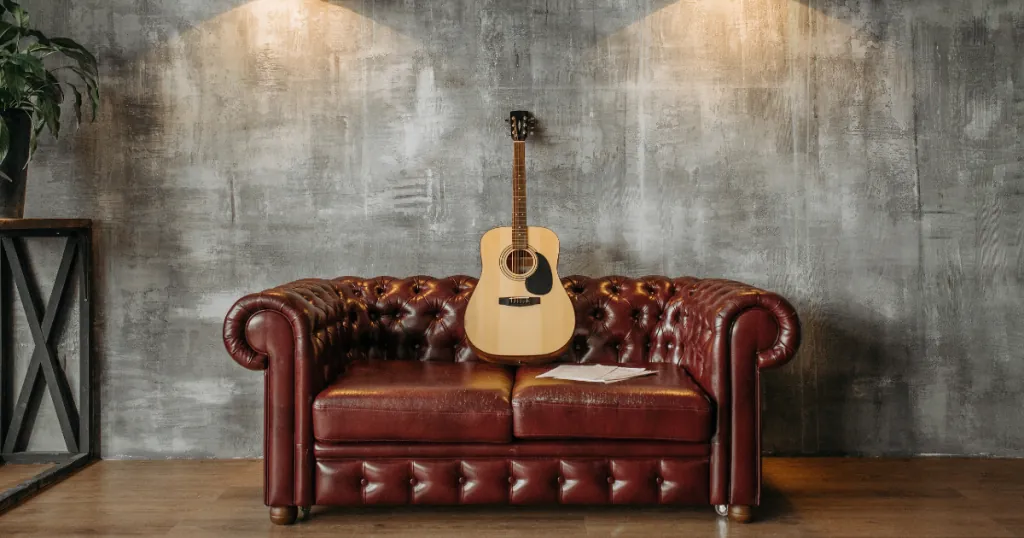
Leather looks its best in warm, layered light. Combine ambient light (ceiling fixtures or a pendant), task light (a reading lamp beside the sofa) and accent light (wall sconces, picture lights or a lamp on a shelf). Warm white bulbs around 2700–3000K bring out the color of brown and burgundy leather, and dimmer switches let you shift from bright to cozy.
- Wall art: hang art centered over the sofa, roughly two-thirds of the sofa's width, with the bottom edge about 8–10 in (20–25 cm) above the back.
- Decorative objects: vases, candles and frames in glass, metal or wood reflect light and add interest. Group them in odd numbers.
- Plants: greenery brings life to darker leather and suits almost every style.
- Window treatments: sheer curtains or blinds soften the light and protect leather from fading in direct sun.
Common decorating mistakes to avoid
Avoid: Placing a leather sofa in strong direct sunlight or right next to a radiator or fireplace. Heat and UV light fade and dry out leather, so keep it at least 2 feet (60 cm) from heat sources and condition the leather regularly.
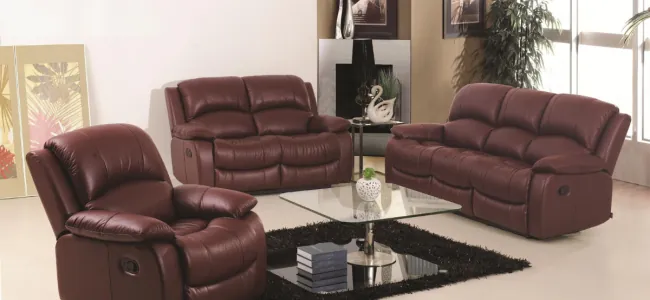
- Everything matching. A full matching leather set can look heavy and dated. Mix in fabric, wood and metal.
- Overcrowding. Too many chairs, tables and accessories make a room feel cramped. Leave space around the sofa so it can breathe.
- No texture or color. Leather alone can feel cold. Rugs, pillows and throws are what make it cozy.
- Wrong scale. Match the sofa and accessories to the room. A compact sofa with smaller pieces suits a small space, while a large room needs larger pieces. See our guide to sofas for small spaces.
Frequently asked questions
What colors go well with a brown leather sofa?
Neutrals such as cream, beige and soft gray are the safest choice. Earthy tones like olive, rust and terracotta add warmth, while blue, teal and green create a balanced contrast. Use bold colors in small doses and repeat them around the room.
What color walls go with a black leather sofa?
Light walls work best: warm white, soft gray, greige, beige or pale sage. They provide contrast so the sofa stands out and the room does not feel dark. A deep accent wall can work in a large, bright room.
Should my accent chair match my leather sofa?
It does not need to match exactly, and usually looks better if it does not. Choose a chair that shares a color, style or material with the sofa, such as a fabric chair in a shade picked from your pillows or rug.
What rug goes with a leather sofa?
A soft, textured rug in wool, jute or a high pile balances smooth leather. Pick a lighter rug under a dark sofa, and make sure it is big enough for at least the front legs of the sofa and chairs to sit on it.
Can I change the color of my leather sofa?
It is possible but tricky. Pigmented leather can be recolored by a leather professional, while aniline leather is much harder to change evenly. Consider whether the cost makes sense compared with refreshing the room around the sofa, or with a new sofa.
Can I mix leather furniture with fabric furniture?
Yes, and it usually looks better than an all-leather room. Mixing materials adds depth and contrast. Our guide to sofa upholstery fabrics can help you choose fabrics for chairs and ottomans.
Still choosing your sofa? Our guide on how to choose a leather sofa covers quality, comfort and price, and the leather sofa hub brings together all our leather buying, care and styling guides.
 Leather vs Fabric Sofa: Which Should You Choose?Leather or fabric? Compare durability, comfort, cleaning, pets, allergies and cost, plus the leather grades and fabric types to look for on the label.
 Faux Leather Sofa Guide: PU vs Vinyl vs Bonded, Care and RepairFaux leather sofas explained: PU vs vinyl vs bonded leather, why some peel, how long they last, how to clean them, fix small tears, and when to buy one.
 Types of Leather for Sofas: Grades, Finishes and Italian Leather ExplainedFull-grain, top-grain, split and bonded leather, aniline and pigmented finishes, and Italian leather: how each sofa leather looks, wears and ages.
 How to Choose a Leather Sofa: Quality, Comfort, Price and Where to BuyHow to choose a leather sofa: in-store quality checks, what drives the price, soft vs firm comfort, where to buy, and whether leather is worth it.