A coffee table should be about the same height as your sofa seat, or 1 to 2 inches (2.5–5 cm) lower. Most sofa seats sit 17 to 19 inches (43–48 cm) off the floor, which is why most coffee tables are 16 to 18 inches (41–46 cm) tall.
Height is only part of the picture, though. How far the table stands from the sofa, how long it is and how your end tables relate to the sofa arms decide whether the room feels comfortable or awkward. This guide gives you the standard measurements, explains when a taller table makes sense, and shows how to size side tables.
Key points
- Coffee table height: equal to the seat height or 1–2 in (2.5–5 cm) lower. Typical range: 16–18 in (41–46 cm).
- Distance from the sofa: 14–18 in (36–46 cm) between the seat edge and the table.
- Length: roughly two-thirds of the sofa's overall length.
- End tables: within about 2 in (5 cm) of the sofa arm height, and no deeper than the sofa.
- Taller and lift-top tables work well for eating, laptop work and anyone who finds bending down difficult.
In this guide
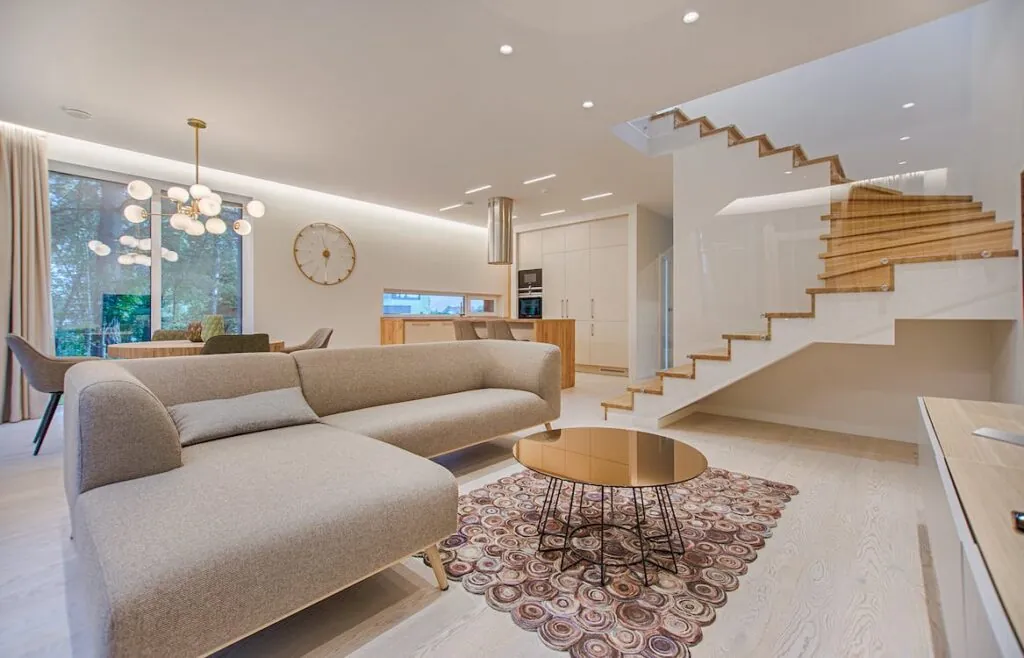
How tall should a coffee table be?
The simple rule is to match the table top to the top of the seat cushion, or go slightly lower. At that height you can reach a cup or a remote without stretching, and the table does not block your view of the room or the TV.
A table that is much lower than the seat (more than about 4 inches or 10 cm) makes you lean forward and down every time you put something on it. A table that is clearly higher than the seat starts to feel like a barrier in front of your knees, unless it is designed to be tall for a reason (see the section on taller tables below).
| Sofa seat height | Comfortable coffee table height |
|---|---|
| 15–16 in (38–41 cm), low modern sofa | 13–16 in (33–41 cm) |
| 17 in (43 cm) | 15–17 in (38–43 cm) |
| 18 in (46 cm) | 16–18 in (41–46 cm) |
| 19 in (48 cm) | 17–19 in (43–48 cm) |
| 20 in (51 cm) or higher | 18–20 in (46–51 cm) |
Low-slung sofas with deep seats usually look and work best with a low-profile table of 12 to 15 inches (30–38 cm). Higher, more upright sofas, which are often a good choice for taller people or anyone who wants easier standing up, pair better with tables at the top of the range. Our guide to standard sofa dimensions explains typical seat heights by sofa type.
How to measure your seat height
- Measure from the floor. Hold the tape vertically at the front edge of the seat and read the height of the top of the cushion.
- Note how much it sinks. Soft, feather-filled cushions can drop 1 to 2 inches (2.5–5 cm) when you sit. If yours do, aim for a table at the lower end of the range.
- Check the product page. Coffee table listings give the overall height. For tables with a raised rim or tray top, the usable surface is what counts.
- Test it with a box. Stack books or a box to the planned height, sit down and reach for it. Thirty seconds of testing beats guessing.
How far should a coffee table be from the sofa?
Leave 14 to 18 inches (36–46 cm) between the front of the sofa seat and the edge of the table. That is close enough to reach from a seated position and far enough to walk in and sit down without bumping your shins. Around 16 inches (41 cm) suits most rooms.
- Closer than 12 in (30 cm): legs feel cramped and people have to step over each other.
- Farther than about 24 in (61 cm): you have to stand up or lean far forward to reach the table.
- Main walkways: where people walk around the table to cross the room, keep 30 to 36 inches (76–91 cm) clear.
- Reclining sofas: measure the depth with the footrest fully extended and place the table beyond that point. The reclining sofa guide covers the clearances you need.
If you are still planning the room, the same measurements belong in your floor plan. Our guide on how to measure for a sofa shows how to tape the sofa and table footprints on the floor before you buy.
How big should a coffee table be?
The classic guideline is that a coffee table should be about two-thirds the length of the sofa. That keeps the proportions balanced and lets people at both ends of the sofa reach the table.
| Sofa length | Coffee table length (about 2/3) |
|---|---|
| 60 in (152 cm), apartment sofa or loveseat | About 40 in (102 cm) |
| 72 in (183 cm) | About 48 in (122 cm) |
| 84 in (213 cm), standard three-seater | About 56 in (142 cm) |
| 96 in (244 cm) | About 64 in (163 cm) |
Treat two-thirds as a starting point rather than a law. In a narrow room, a shorter table or a pair of small tables can work better than one long one. The width of the table matters too: about half the depth of the sofa is a useful maximum, and anything wider than about 30 inches (76 cm) is hard to reach across from the far side.
Coffee tables with sectionals
A sectional has two seating sides, so the table has to serve both. A square or round table placed in front of the corner usually works best. Keep the same 14 to 18 inches (36–46 cm) gap from both seat edges. With a chaise, keep the table clear of the chaise so the person lying on it can swing their legs off. For more layout ideas, see our guide to sectional layouts.
Shape: round, oval, square or rectangular
Rectangular
The standard partner for a straight sofa. Easy to size with the two-thirds rule and gives the most surface.
Round or oval
No sharp corners, easier to walk around and kinder in homes with small children. Oval tables follow the length of a sofa better than round ones.
Square
Suits sectionals and seating groups arranged around a center point, such as a sofa facing two chairs.
Nesting or pairs
Two smaller tables can be split apart or moved aside when you need floor space. Useful in small rooms.
When a taller coffee table makes sense
Taller-than-usual coffee tables, often 20 to 22 inches (51–56 cm), and lift-top tables have a real place in many homes. They are not the default, but they solve specific problems.
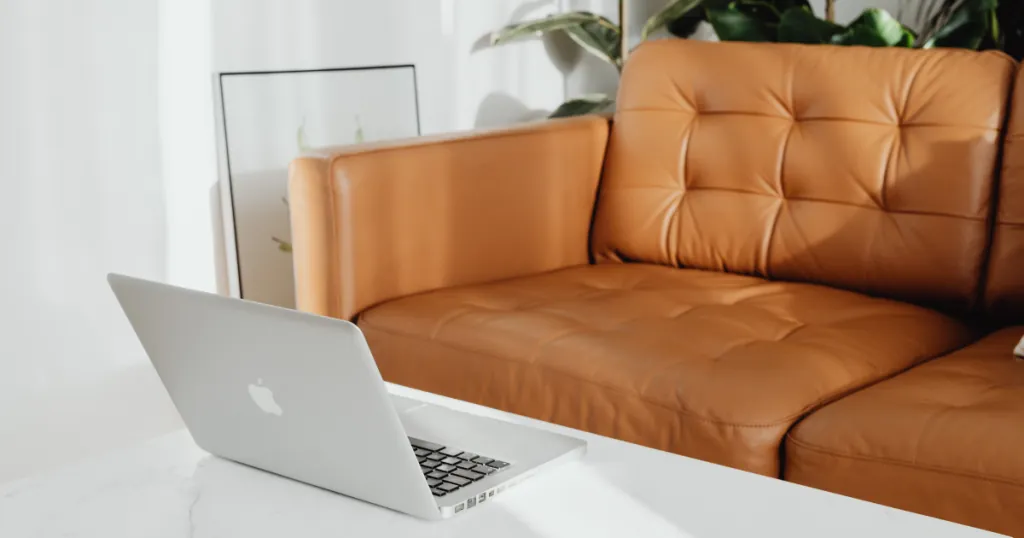
- Eating and working from the sofa. A higher surface puts a plate or laptop closer to you, so you hunch less.
- Less bending. For older people, people with back or knee problems, or anyone who finds it hard to reach low, a slightly higher table can be easier to use. Wheelchair users may also find a higher surface easier to reach; check the knee clearance underneath and the reach from the chair before you buy.
- Storage. Taller tables often have a shelf or drawers below the top, which helps keep remotes, coasters and magazines out of sight.
- Games and hobbies. Board games, puzzles and crafts are more comfortable on a raised surface.
- Visual variety. In a room where every piece is low, one taller piece can make the arrangement more interesting.
Lift-top coffee tables
A lift-top table sits at normal coffee table height but has a top that rises on a hinged mechanism, toward you and up, close to a comfortable eating or laptop height. Underneath there is usually a storage compartment. It gives you the best of both: a low table for everyday use and a raised surface when you need it. Before buying one, check how smoothly the mechanism moves, how much weight the raised top can hold, and whether there is a pinch guard where the hinges close.
Pros of a taller or lift-top table
- More comfortable for meals, laptops and games
- Less bending for people with limited mobility
- Often includes extra storage
- Can double as a small desk
Cons
- A tall, solid table can feel bulky and make a small room look more crowded
- Less legroom if placed too close
- Lift mechanisms add weight and moving parts
- Can block the view of a low TV or fireplace
If you want a higher table without the bulk, choose an open base, slim legs or a glass top. These keep the floor visible, so the room still feels open.
Tip: If you only need a raised surface now and then, a C-shaped side table is an alternative. Its base slides under the sofa and its top reaches over the seat, which puts a laptop or plate right in front of you.
End table height: match the sofa arm
An end table, also called a side table, should be within about 2 inches (5 cm) of the height of the sofa arm. Level with the arm or slightly lower is easiest: you can rest your hand and pick up a glass without lifting your elbow. Sofa arms are typically 22 to 27 inches (56–69 cm) high, so most end tables fall in that range as well.
- Depth: the table should not stick out past the front of the sofa arm. Choose one about as deep as the sofa, or less.
- Gap: leave a few inches between the table and the arm so you can clean and the upholstery does not rub.
- Lamps: on a lamp table, the bottom of the shade should end up roughly at eye level when you are seated, which is often around 38 to 42 inches (97–107 cm) from the floor. A taller table needs a shorter lamp, and the other way around.
- Matching pairs: two end tables do not have to match, but keep their heights close so the sofa looks balanced.
High side tables
High side tables are tall, slender accent tables that stand closer to hip height than to arm height. Their narrow top takes up very little floor space, which makes them useful in small apartments, tight corners and next to chairs where a wider table would block the way. Next to a sofa, a top a few inches above the arm can still work well, especially as a lamp table or plant stand, but anything much higher becomes awkward to reach from a seated position.
Popular ways to use a high side table include:
- a lamp table beside a reading chair to create a reading nook
- a plant stand that lifts greenery to eye level
- a small drinks station when you entertain
- a bedside table next to a tall bed, where it falls within easy reach
- an accent table in a hallway or entryway to display a vase or candles
Avoid: tall, narrow tables with a light base in busy spots. They tip more easily than low, wide tables. Choose a weighted or wide base, keep heavy objects off the top, and do not place one where children play or pets race past.
High side tables come in wood, metal, glass and combinations. Choose a material that echoes something else in the room, such as the sofa legs, a lamp base or picture frames, so the piece looks deliberate.
Ottomans as coffee tables
An upholstered ottoman can replace a coffee table, especially in family rooms. Because it doubles as a footrest, it can be the same height as the seat or very slightly lower. Add a large tray for drinks, as a soft top is not stable enough for cups on its own. Storage ottomans with a lift-off lid add hidden space for blankets and toys. If you mainly want a better place to rest your legs, our guide on how to make a sofa more comfortable has more ideas.
Small rooms: tables that save space
In a compact living room, the coffee table can take as much visual space as the sofa. These choices help:
- Glass or acrylic tops let you see the floor through the table.
- Raised legs instead of a solid base make the piece look lighter.
- Round tables are easier to walk around than rectangles in tight spaces.
- Nesting tables can be pulled apart when guests arrive and stacked away afterward.
- A single large ottoman can serve as seat, footrest and table.
See our guide to sofas for small spaces for the sofa side of the equation.
Frequently asked questions
Should a coffee table be higher or lower than the sofa?
Slightly lower or the same height. The usual guideline is equal to the seat height or 1 to 2 inches (2.5–5 cm) below it. Higher tables are a deliberate choice for eating, working or easier reach, not the default.
What is the standard coffee table height?
Most coffee tables are 16 to 18 inches (41–46 cm) tall, because most sofa seats are 17 to 19 inches (43–48 cm) high. Low-profile tables of 12 to 15 inches (30–38 cm) suit low modern sofas.
Can a tall coffee table be used as a regular coffee table?
Yes, as long as it is not much higher than your seat and you leave enough legroom. A lift-top table is the most flexible option, because it sits at normal height until you raise the top.
How much space should be between a coffee table and a TV stand?
Treat the space between them as a walkway. If people walk through it, leave 30 to 36 inches (76–91 cm). If nobody walks there, about 18 inches (46 cm) is enough to reach the TV stand.
Should an end table be taller than the sofa arm?
Ideally it is level with the arm or up to about 2 inches (5 cm) lower or higher. A table much higher than the arm is awkward to reach from the sofa, and one much lower makes you lean over the arm.
Getting the table right starts with knowing your sofa's measurements. If you have not bought the sofa yet, start with standard sofa dimensions, or browse all our sofa buying guides for layout and sizing help.
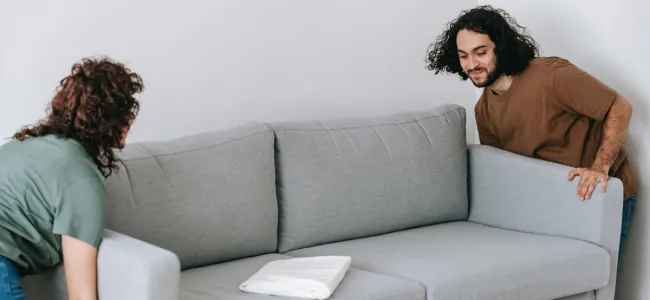 How to Get Rid of an Old Sofa: Sell, Donate, Recycle or Haul AwayWays to get rid of an old sofa: selling, giving it away, donating, recycling, bulk pickup, junk removal and haul-away, plus how to prepare and move it.
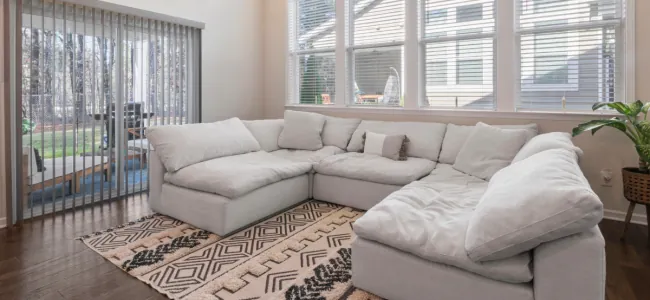 How to Separate a Sectional Sofa (and Put It Back Together)How to separate a sectional sofa: identify the connectors, release them without damage, free stuck clips, and reconnect the pieces so they stay put.
 How to Replace Sofa Legs (Thread Sizes, Height and Steps)How to replace sofa legs: find the thread size (5/16 in or M8), choose the right height, fit mounting plates if needed and install new legs safely.
 Sectional Sofa Layout Ideas for Every Room ShapeSectional sofa layout ideas for corners, open plans, small rooms, TVs and fireplaces, with walkway clearances, chaise placement and the right rug size.