Sofa styles are defined by a few features: the shape of the arms, the type of back, the base and legs, and details such as tufting. Classic styles like the Chesterfield, camelback and English roll arm have curved lines and traditional details, while modern and contemporary styles such as mid-century modern and track-arm sofas use clean lines and simple shapes.
Knowing the names makes shopping much easier, because you can search for exactly the shape you want. This guide explains the main styles, how classic and contemporary designs differ, how to pick one for your room, and how to finish it with throw pillows.
Key points
- Arms, back and base define a style. Learn those three and you can identify almost any sofa.
- Classic styles (Chesterfield, camelback, English roll arm, Lawson) feature rolled arms, tufting or carved legs; contemporary styles favor straight lines and minimal ornament.
- "Modern" usually refers to mid-20th-century design; "contemporary" means current trends, though many stores use the words interchangeably.
- Comfort varies within every style: always check seat depth, seat height and firmness, not just the look.
- Throw pillows are the easiest way to shift a sofa's style; 20–22 in (51–56 cm) squares suit most standard sofas.
In this guide
The anatomy of a sofa style
Before looking at named styles, it helps to know the building blocks. Designers mix and match these, so many sofas combine features from several styles.
Arms
Rolled arms curve outward. English arms are low, small rolls. Track arms are straight and squared. Sloped or flared arms angle outward. Armless sofas save width.
Back
A tight back is upholstered directly to the frame. A loose cushion back has separate cushions. A pillow back uses scattered cushions. A camel back rises to a hump in the middle.
Base
Exposed legs (tapered, turned or block) make a sofa look lighter. A skirt hides the legs for a softer, traditional look. A plinth base sits flat on the floor.
Details
Button tufting, channel tufting, nailhead trim, piping and welting all push a sofa toward a particular style.
How these parts are built matters as much as how they look. Our sofa construction guide explains frames, springs and cushions, which are what make any style last.
Classic vs contemporary sofas
Most styles fall somewhere between two broad families. Classic sofas carry traditional details and a sense of formality. Contemporary sofas focus on simple shapes, comfort and function. Many sofas today are "transitional," mixing a classic silhouette with cleaner details.
| Feature | Classic | Contemporary |
|---|---|---|
| Lines | Curved, rolled, shaped | Straight, low, geometric |
| Arms | Rolled or scrolled | Track, slim or armless |
| Details | Deep tufting, nailheads, carved wood | Minimal ornament, clean seams |
| Legs | Turned or carved wood, sometimes casters | Tapered wood, metal or hidden |
| Colors and materials | Rich, deep colors; leather, velvet, damask | Neutrals or bold accents; linen-look weaves, performance fabrics, leather |
| Feel | More upright and formal | Often lower and more relaxed |
| Formats | Usually fixed sofas and loveseats | Often modular, sectional, reclining or with storage |
How to decide between them
- Your existing decor. A traditional or vintage-inspired room usually welcomes a classic sofa; a minimalist or industrial space suits a contemporary one.
- Space and layout. Contemporary designs are often easier to adapt, because modular pieces can be rearranged and slim arms save width.
- Comfort vs formality. Classic sofas tend to sit more upright and formal; many contemporary sofas are built for lounging.
- Longevity. Classic shapes have stayed in fashion for generations. Very trend-driven contemporary pieces may date faster, while simple modern shapes age well.
Classic sofa styles
Chesterfield
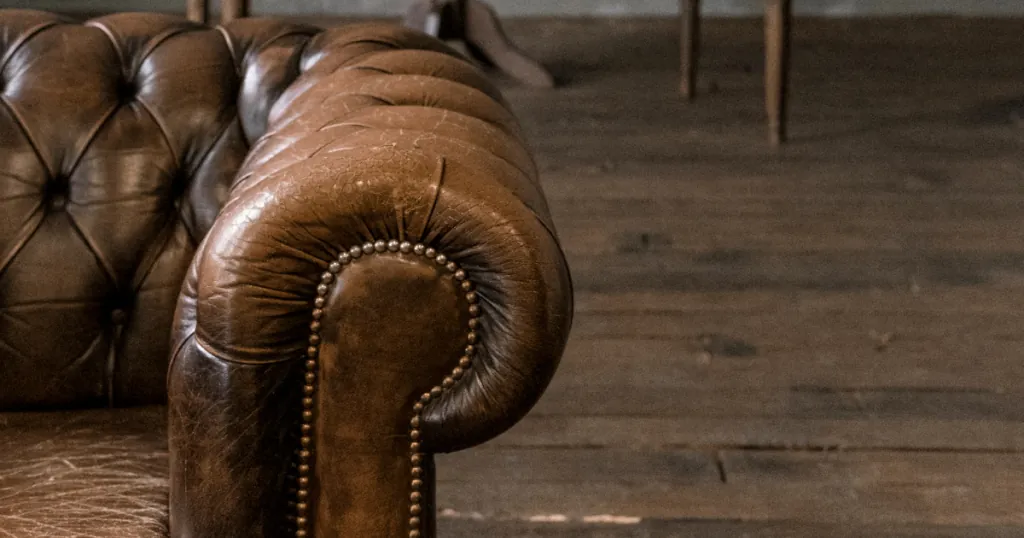
The Chesterfield is probably the most recognizable sofa ever made. Its signature features are deep button tufting, rolled arms that sit at the same height as the back, and often nailhead trim along the arm fronts. The style has British roots in the 18th and 19th centuries; the name is often linked to an Earl of Chesterfield, though the exact origin is uncertain. Traditional Chesterfields are covered in leather, while velvet and other fabrics are common today.
Comfort surprises some buyers. A traditional Chesterfield sits fairly firm and upright, with a seat that suits conversation more than lounging. Many modern versions add loose seat cushions and a deeper seat, so sit on one before you decide. When buying, look for evenly spaced, firmly anchored buttons, a solid hardwood frame and, for leather versions, the leather grade; our guide to leather sofa types explains the differences. Prices vary widely with size, leather quality and whether the tufting is done by hand, so compare construction details and the warranty and return policy, whether you buy from a store, online or from a maker of custom furniture.
To keep one looking good, vacuum the tufting creases regularly with a soft brush tool, wipe spills straight away with a soft cloth, rotate loose cushions for even wear, and keep the sofa out of direct sunlight and away from radiators or fireplaces to prevent fading and drying. For leather care, see how to clean a leather sofa.
Camelback
A camelback sofa has a back that rises to a hump in the middle, sometimes with two humps. It usually has rolled arms, exposed wooden legs and a tight back, and is associated with 18th-century English and American furniture. It reads as formal and elegant, and suits traditional living rooms and sitting rooms.
English roll arm
The English roll arm sofa has low, tightly rolled arms set back from the front of the seat, a tight back, deep seat cushions and short turned legs, sometimes on casters. It looks relaxed but tailored, and it works in both traditional and transitional rooms. The low arms make it comfortable for lying down with a pillow under your head. Closely related designs are sometimes sold as "Bridgewater" sofas.
Lawson
The Lawson is defined by back cushions that are separate from the frame, with arms set lower than the back. The style dates to the early 20th century in the United States and is usually linked to Boston businessman Thomas W. Lawson. Arms can be rolled, square or track. Because it is simple and comfortable, the Lawson is one of the most common sofa shapes in the US, even if few people know it by name.
Tuxedo
A tuxedo sofa has arms at the same height as the back, creating a crisp, boxy outline. It is often tufted and is usually traced to Tuxedo Park, New York, in the 1920s. With straight lines and a tight back, the tuxedo bridges classic and modern, and fits well in glamorous or Art Deco-inspired rooms. It tends to sit upright and firm.
Modern and contemporary sofa styles
Mid-century modern
Mid-century modern sofas draw on design from roughly the 1940s to the 1960s. Look for slim, tapered wooden legs, a low profile, straight or gently angled arms, a tight back and often button or channel tufting. Scandinavian influences are strong. These sofas look light and suit smaller rooms, but seats can be shallow and firm, so check seat depth if you like to curl up.
Modern and contemporary
Contemporary sofas follow current tastes, so their look changes over time. Today they typically feature clean lines, track or slim arms, low backs and neutral or boldly colored upholstery. Many add practical features: power or manual reclining seats, adjustable headrests, built-in storage, pull-out beds or modular sections. They often come in leather, linen-look fabric or velvet.
When choosing a modern sofa, measure your room first, think about how you use the space (kids and pets call for stain-resistant, easy-clean fabric; movie nights may call for reclining seats), compare materials, test comfort in person if you can, and set a budget that weighs long-term durability rather than the lowest price.
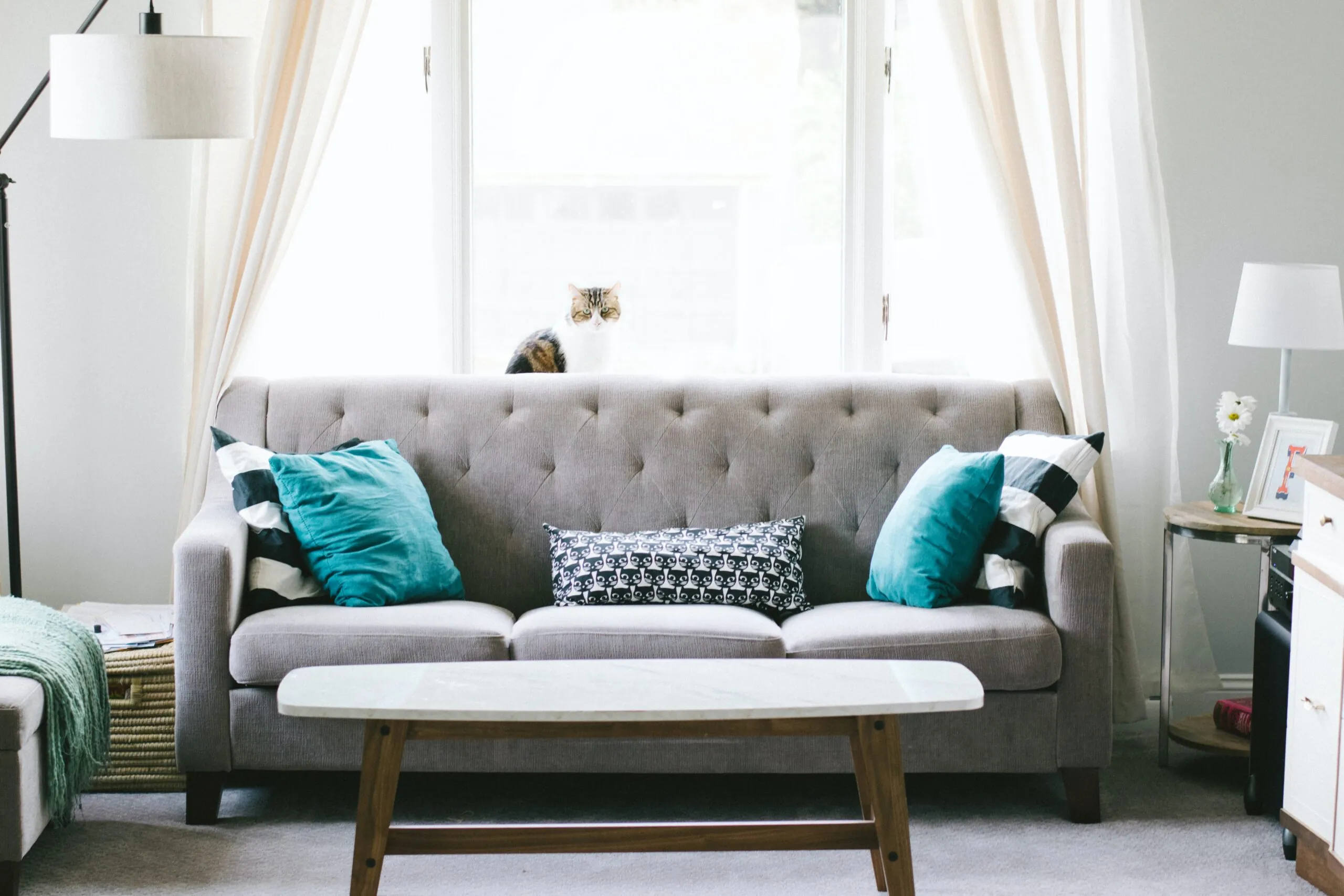
Sectional, chaise and slipcovered sofas
Some sofa types are defined by format rather than by period style. Each can be made in a classic or contemporary look.
- Sectional. Two or more pieces joined in an L or U shape. Ideal for large families and open-plan rooms. Compare the pros and cons in sectional vs sofa.
- Chaise sofa. A sofa with an extended seat on one end for putting your feet up, using less space than a full sectional.
- Slipcovered sofa. A relaxed, often slightly loose-fitting removable cover. It suits coastal, cottage and farmhouse rooms and is practical, because the cover can be washed. See our sofa slipcover guide.
- Modular sofa. Separate units you can rearrange or extend later, popular in contemporary homes.
Sofa styles compared
| Style | Arms | Back | Typical feel | Best for |
|---|---|---|---|---|
| Chesterfield | Rolled, same height as back | Deep button tufted | Firm, upright | Studies, traditional or eclectic rooms |
| Camelback | Rolled | Tight, humped | Firm, formal | Formal living rooms |
| English roll arm | Low, small rolls, set back | Tight | Relaxed, deep seat | Traditional and transitional rooms |
| Lawson | Lower than back; any shape | Loose cushions | Comfortable, casual | Family rooms |
| Tuxedo | Same height as back | Tight, often tufted | Upright, crisp | Glam and Art Deco rooms |
| Mid-century modern | Slim, straight or angled | Tight, often tufted | Firm, low | Small rooms, retro and Scandinavian looks |
| Contemporary | Track or armless | Loose or tight | Varies; often lounge-friendly | Modern homes, open plans |
| Slipcovered | Usually rolled | Loose cushions | Soft, casual | Coastal, cottage, homes with kids |
How to choose the right style for your home
- Look at the room's architecture. High ceilings and moldings carry tall, traditional shapes; low ceilings and open plans suit lower, simpler sofas.
- Match how you sit. If you lounge and nap, look for deep seats and low arms, such as an English roll arm or a contemporary deep-seat sofa. If you sit upright, a Chesterfield, tuxedo or mid-century sofa works well.
- Check the size. Rolled arms and tufting add bulk. In a small room, slim arms and exposed legs keep things light. Our guide to standard sofa dimensions lists typical sizes.
- Think about upkeep. Deep tufting collects dust and crumbs; skirts get scuffed; slipcovers can be washed.
- Plan for the long term. If you change decor often, a simple shape in a neutral color is easiest to restyle with pillows and throws.
Tip: Unsure which style you like? Save photos of rooms you love and look for the common thread in the arms, legs and back. Most people are drawn to one or two shapes again and again.
Styling your sofa with throw pillows
Throw pillows are the quickest and least expensive way to change how a sofa looks. They add color and texture, extra comfort, and visual balance, and they can be swapped with the seasons without touching the sofa itself.
Color, texture and pattern
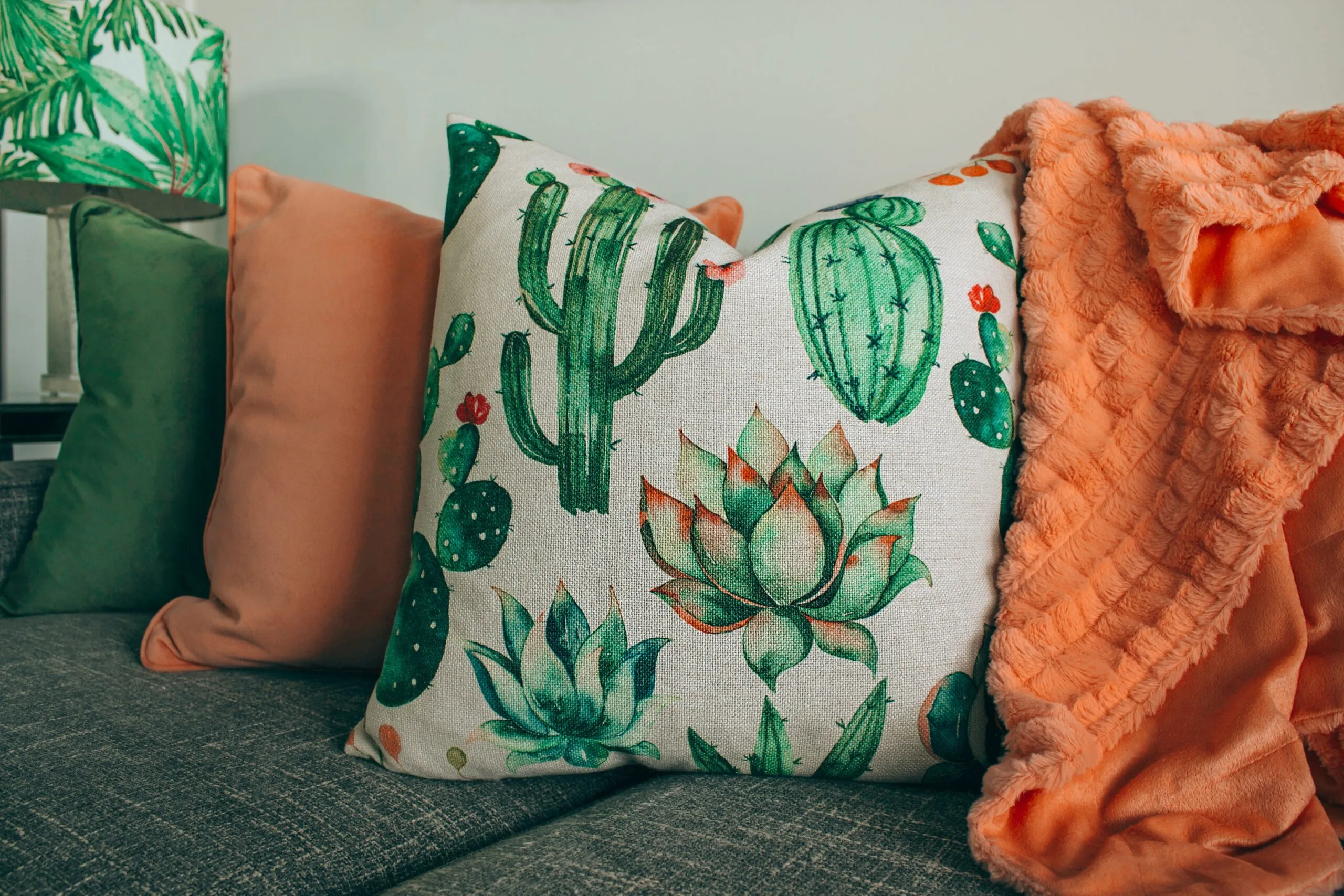
Pick two or three colors taken from the room, such as a rug or artwork, and repeat them across the pillows. Mix textures, such as velvet, linen and a soft knit or faux fur, for depth. When combining patterns, vary the scale: one large pattern, one small pattern and a solid usually sit together well.
Comfort and support
Pillows are practical too. A lumbar pillow, often about 12 by 20 inches (30 × 51 cm), adds lower-back support on a deep sofa, and a firmer square pillow can make a deep seat feel shallower. For more ideas, see how to make a sofa more comfortable.
Size and arrangement
- Size to the sofa. 20–22 in (51–56 cm) squares suit most standard sofas; 18 in (46 cm) suits loveseats and slim modern sofas; 22–24 in (56–61 cm) suits deep or oversized sofas.
- Symmetry for calm. Place matching pairs at each end, with an optional lumbar pillow in the center. This suits classic and formal rooms.
- Asymmetry for ease. Three pillows on one side and two on the other feels relaxed and works well on contemporary sofas.
- Layer by size. Put larger pillows at the back and smaller ones in front.
- Do not overcrowd. Four to five pillows is plenty for a three-seat sofa; leave room to sit.
A pillow insert about 2 inches (5 cm) larger than its cover looks fuller and keeps its shape. Feather or down blends hold the classic "chop" crease; polyester inserts are lighter and easier to wash. For color ideas for leather sofas in particular, see our leather sofa decorating ideas.
Frequently asked questions
What is the most timeless sofa style?
The Chesterfield, English roll arm and Lawson have all stayed popular for generations. A simple track-arm sofa in a neutral fabric is the most timeless contemporary choice.
What is the difference between a Lawson and an English roll arm sofa?
A Lawson has loose back cushions and arms lower than the back, in any shape. An English roll arm usually has a tight back and small, low rolled arms set back from the front of the seat.
Is a Chesterfield sofa comfortable?
It depends on what you like. Traditional Chesterfields are firm and upright, which suits sitting and conversation. Versions with loose seat cushions and deeper seats are better for lounging.
What is the difference between modern and contemporary sofas?
Modern usually refers to the mid-20th-century design movement, with tapered legs and clean lines. Contemporary means what is current now, which changes over time. In stores, the two terms are often used interchangeably.
How many throw pillows should go on a sofa?
For a standard three-seat sofa, three to five pillows is typical. Two to three suit a loveseat. Leave enough room for people to sit comfortably.
Which sofa style is best for a small room?
Mid-century modern and other slim-armed sofas with exposed legs look lightest. Avoid bulky rolled arms and skirts in a tight space. Our guide to sofas for small spaces covers more options.
Once you have a style in mind, check the size and comfort next. Our guide to sofas for small spaces helps in tight rooms, and you will find every buying guide in our sofa buying guides hub.
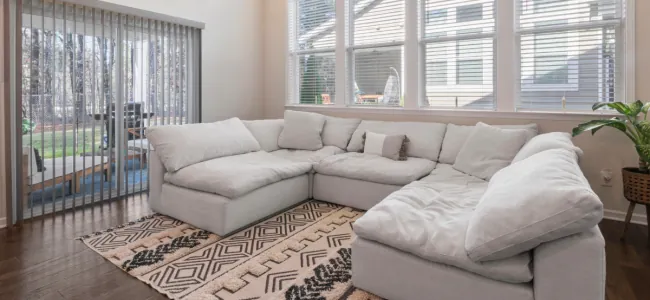 Sectional vs Sofa: Which Is Right for Your Living Room?Sectional or a standard sofa? Compare floor space, seating, room layout, moving and cost, with measurements and a simple checklist to decide.
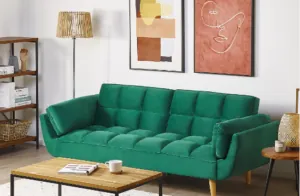 Sofas for Small Spaces: How to Choose One That FitsHow to pick a sofa for a small living room or apartment: the right size, arm and leg styles, depth, colors, sleeper and modular options, and what to avoid.
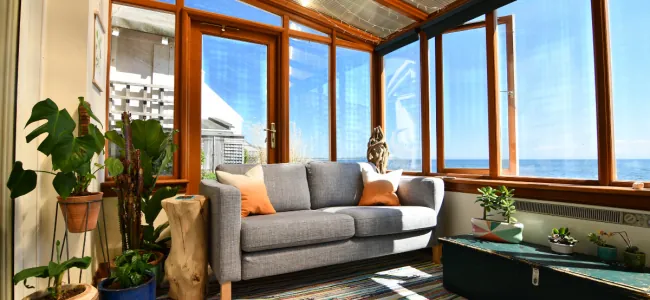 How to Measure for a New Sofa (Room, Doorways and Stairs)Measure your room, doorways, hallways and stairs before buying a sofa. Step-by-step instructions, clearances and the diagonal-depth test for tight doors.
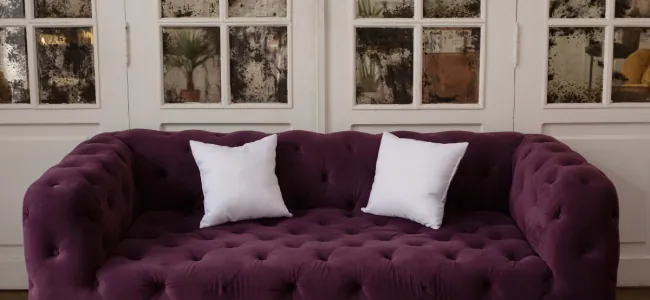 What Makes a Good Sofa? Frame, Springs and Cushions ExplainedHow to judge sofa quality: frame materials and joints, spring systems, foam density and cushion fills, plus quick tests you can do in a showroom.