The main difference between a loveseat and a sofa is size: a loveseat seats two people and is typically 52 to 72 inches (132–183 cm) long, while a standard sofa seats three or more and usually measures 80 to 90 inches (203–229 cm). Between them sits the apartment sofa, and next to them the settee, a name that is often used loosely for a small, more upright two-seater.
Which one you need depends on how many people sit together every day, whether you want to lie down, and how much floor space you have. This guide compares the options and shows how to combine a sofa and loveseat in one room.
Key points
- Loveseat: about 52–72 in (132–183 cm) long, seats two. Standard sofa: about 80–90 in (203–229 cm), seats three.
- An apartment sofa (about 68–80 in / 173–203 cm) is the middle ground for small homes that still want three seats.
- A loveseat is too short for most adults to lie down on; for napping, look for at least 80 in (203 cm).
- In a sofa-plus-loveseat layout, keep main walkways 30–36 in (76–91 cm) wide and both pieces within easy talking distance.
In this guide
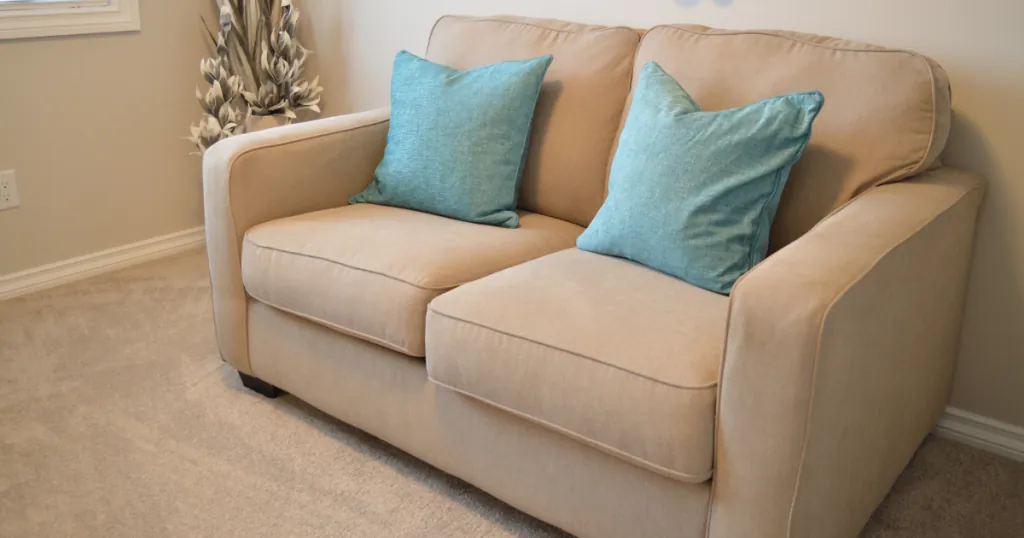
What counts as a loveseat?
A loveseat is a two-seat sofa. It usually has the same seat height, seat depth and arm style as the matching full-size sofa, just with less length. Most have two seat cushions, though some have a single bench cushion. Because the proportions are the same, a good loveseat feels like a sofa that ends sooner, not like a large armchair.
Sofa is the general term for an upholstered seat for several people. In everyday American English, sofa and couch mean the same thing; if you are curious where the words come from, see our article on sofa vs couch.
Loveseat vs sofa vs apartment sofa vs settee
Retailers use these names inconsistently, so always check the real measurements. The ranges below are typical.
| Type | Typical length | Typical depth | Seats | Character |
|---|---|---|---|---|
| Settee | 50–68 in (127–173 cm) | 26–34 in (66–86 cm) | 2 | Upright, often with exposed legs or wood details; more formal |
| Loveseat | 52–72 in (132–183 cm) | 30–38 in (76–97 cm) | 2 | Same comfort as a sofa, in a two-seat length |
| Apartment sofa | 68–80 in (173–203 cm) | 30–36 in (76–91 cm) | 2–3 | Slimmer arms and depth; scaled for small rooms |
| Standard sofa | 80–90 in (203–229 cm) | 32–40 in (81–102 cm) | 3 | The default living room size; long enough to lie on |
| Extra-long sofa | 90–110 in (229–279 cm) | 34–42 in (86–107 cm) | 3–4 | Needs a long wall; an alternative to a sectional |
For a full size chart, including sectionals and sleepers, see our guide to standard sofa dimensions.
Is a settee the same as a loveseat?
Often, yes, in practice. Traditionally a settee is a lighter, more upright piece, sometimes with a visible wooden frame and a firmer seat, and it can seat two or three. A loveseat is usually a fully upholstered, more relaxed two-seater. If comfort for long evenings matters, look past the label and check seat depth and cushion construction.
The real size differences in daily use
On paper the gap between a loveseat and a sofa is 15 to 25 inches (38–64 cm). In use, that difference shows up in three ways.
- Seating. Count on about 22 to 30 inches (56–76 cm) of seat width per person between the arms. A loveseat seats two adults comfortably; a third person will feel squeezed.
- Lying down. Most adults need an overall length of 80 inches (203 cm) or more to stretch out. On a loveseat you can curl up, but not lie flat.
- Personal space. Two people on a loveseat sit close together. That is cozy for a couple, less so for roommates or guests who do not know each other well.
Who should choose a loveseat, and who a sofa?
Loveseat suits you if
- One or two people use the living room most evenings.
- The room is small or has short walls between doors and windows.
- You want a second seat in a bedroom, office, entryway or reading nook.
- You plan to pair it with a sofa or chairs to build a flexible layout.
- Your doorways, stairs or elevator are tight.
Choose a sofa instead if
- Three or more people regularly sit together.
- You like to nap or lie down while watching TV.
- It is the only seating in a main living room.
- You entertain often and want everyone on one piece.
- Kids and pets share the seat with you.
Price is rarely a reason to pick one over the other. A loveseat typically costs somewhat less than the matching sofa, but not in proportion to its size, because the frame, arms and labor are much the same.
Loveseat or sofa for a small apartment
In a small apartment, the instinct is to buy the smallest piece. That can backfire if the loveseat is the only seating and two people end up wishing for more room. Before deciding, consider these points:
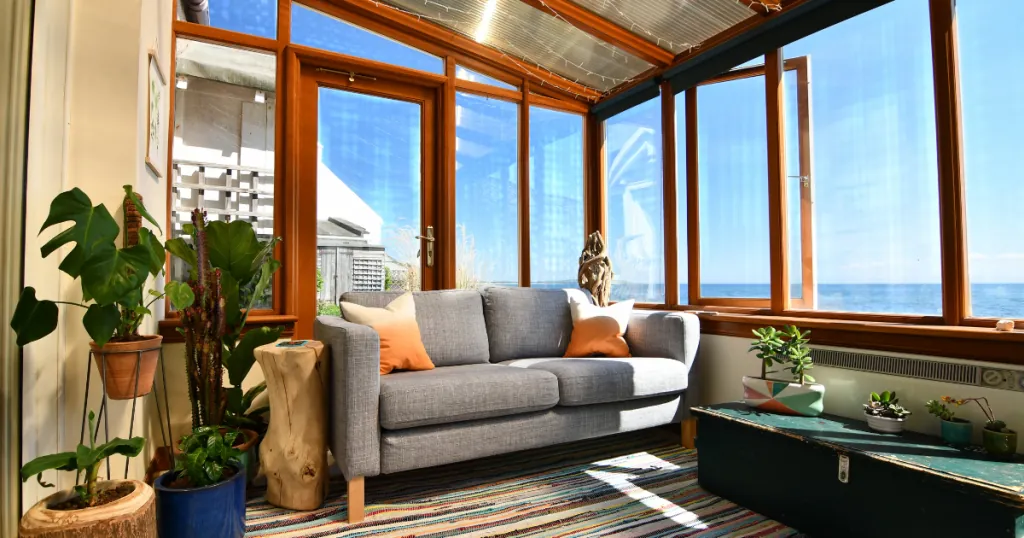
- Arms change everything. A 76-inch (193 cm) apartment sofa with slim track arms can offer as much seat width as an 84-inch (213 cm) sofa with thick rolled arms.
- Use the two-thirds rule. A sofa should fill no more than about two-thirds of the wall behind it. On a 10-foot (3 m) wall, that is about 80 inches (203 cm).
- Watch the depth. In a narrow room, depth matters more than length. Look for 30 to 34 inches (76–86 cm) overall.
- Keep the floor visible. Raised legs and a tight back make any size look lighter.
- Check the delivery route. Compact sofas fit more stairwells and elevators, but measure anyway.
Our guide to sofas for small spaces covers arm styles, sleepers and space-saving details. To check doors and stairs, use our step-by-step guide on how to measure for a sofa.
Tip: If you need a guest bed too, a loveseat sleeper usually has only a twin-size mattress. A full-size sleeper typically starts around 70 to 80 inches (178–203 cm) long, so an apartment-size sleeper may be the better fit. Our sofa bed buying guide explains the options.
Combining a sofa and loveseat: layouts that work
A sofa plus a loveseat seats five without the bulk of a large sectional, and the two pieces can be moved around later. These are the classic arrangements.
L-shape
Sofa along one wall, loveseat at a right angle. Works in most rooms, opens toward a TV or fireplace, and leaves one side free for traffic.
Facing pair
Sofa and loveseat face each other across a coffee table. Best for conversation and for rooms where the focal point sits at the end, such as a fireplace.
U-shape with a chair
Sofa in the middle, loveseat on one side and an armchair opposite. Creates a defined seating area in a large or open-plan room.
Floating divider
The loveseat's back faces the dining area or entry, separating zones in an open plan. Add a console table behind it.
Plan the layout step by step
- Pick the focal point. Decide what the seating faces: a TV, a fireplace, a window or simply each other.
- Place the sofa first. Put the larger piece facing the focal point or along the longest wall.
- Add the loveseat. Set it at a right angle or opposite the sofa, leaving a small gap at the corner of an L so legs and knees do not clash.
- Check the distances. Keep about 14–18 in (36–46 cm) between the seats and the coffee table, and the two pieces about 4–8 ft (1.2–2.4 m) apart so conversation feels natural.
- Protect the walkways. Leave 30–36 in (76–91 cm) for main paths and at least 24 in (61 cm) for minor ones.
- Anchor with a rug. Choose a rug large enough for at least the front legs of both pieces to rest on it.
For coffee table size and height in these layouts, see our coffee table height guide.
Should the sofa and loveseat match?
A matching set is the safest choice and looks tidy in traditional rooms. Mixing works well too, as long as the two pieces share something: a similar seat height, the same leg finish, or a related color. Keep seat heights within about an inch (2.5 cm) of each other so the arrangement looks deliberate. A loveseat in a contrasting fabric, or a leather sofa with a fabric loveseat, can add interest without looking accidental.
Alternatives to consider
- Sectional. Seats more people in one corner and offers a lounge spot, but is harder to move and rearrange. Compare both in sectional vs sofa.
- Chaise sofa. A sofa with a chaise on one end gives you a place to stretch out in less space than an L-shaped sectional.
- Sofa plus two armchairs. More flexible than a loveseat and easier to move, though chairs give less of a shared, cozy feel.
- Two loveseats. A facing pair works well in narrow rooms where a full sofa would block a door or window.
Frequently asked questions
What is the difference between a loveseat and a sofa?
Size and seating. A loveseat is typically 52 to 72 inches (132–183 cm) long and seats two, while a standard sofa is about 80 to 90 inches (203–229 cm) and seats three. Seat height and depth are usually similar.
Can a loveseat be your only couch?
Yes, in a small room or for a household of one or two. If you want to lie down, host guests or share the seat with children or pets, an apartment sofa or standard sofa is usually more practical.
How many people fit on a loveseat?
Two adults sit comfortably on a loveseat. Three can squeeze onto a larger one for a short time, but it is not comfortable for long.
Is an apartment sofa a loveseat?
No. An apartment sofa is a compact full sofa, usually 68 to 80 inches (173–203 cm) long. It often seats three closely and is longer than most loveseats, with slimmer arms and depth than a standard sofa.
What size loveseat goes with an 84-inch sofa?
Most loveseats from the same collection are 58 to 66 inches (147–168 cm) long, which pairs well with an 84-inch (213 cm) sofa. The key is a similar seat height and arm style, not an exact length.
Once you know which size fits, the next decisions are shape and look. Our sofa styles guide explains the main styles, and the sectional layout ideas help if you are still weighing a corner sofa.
 Sectional vs Sofa: Which Is Right for Your Living Room?Sectional or a standard sofa? Compare floor space, seating, room layout, moving and cost, with measurements and a simple checklist to decide.
 Sofas for Small Spaces: How to Choose One That FitsHow to pick a sofa for a small living room or apartment: the right size, arm and leg styles, depth, colors, sleeper and modular options, and what to avoid.
 How to Measure for a New Sofa (Room, Doorways and Stairs)Measure your room, doorways, hallways and stairs before buying a sofa. Step-by-step instructions, clearances and the diagonal-depth test for tight doors.
 What Makes a Good Sofa? Frame, Springs and Cushions ExplainedHow to judge sofa quality: frame materials and joints, spring systems, foam density and cushion fills, plus quick tests you can do in a showroom.