The best sofa bed is the one whose mechanism and mattress match how often someone will actually sleep on it. For a few guest nights a year, a pull-out sleeper with a decent foam mattress is usually enough; for nightly sleeping, a futon, a click-clack with thick foam, or a daybed with a real mattress is often the more comfortable choice.
Below: the main mechanisms, mattress types and sizes, how much floor space the open bed needs, and how to make any sofa bed comfier for guests.
Key points
- Decide first how often it will be slept on: occasional guests and nightly use call for different mechanisms.
- Pull-out sleepers sit like a normal sofa, but their folding mattresses are thin, often 4–6 in (10–15 cm).
- Sleeper mattresses are often shorter than standard beds; a "queen" sleeper is commonly about 60 x 72 in (152 x 183 cm).
- Measure the open footprint, not just the sofa: a pull-out bed can reach 80–90 in (203–229 cm) from the wall.
- A 2–3 in (5–8 cm) mattress topper is the simplest comfort upgrade for most pull-out beds.
In this guide
- Sofa bed, sleeper sofa, futon or daybed?
- Sofa bed mechanisms compared
- Sleeper mattress types
- Sizes: sofa width and bed size
- How to measure for a sofa bed (open and closed)
- Comfort as a sofa and as a bed
- Can a sofa bed replace a regular bed?
- Make it comfier with a mattress topper
- Getting a sofa bed ready for guests
- Daybeds and other alternatives
- Frequently asked questions
Sofa bed, sleeper sofa, futon or daybed?
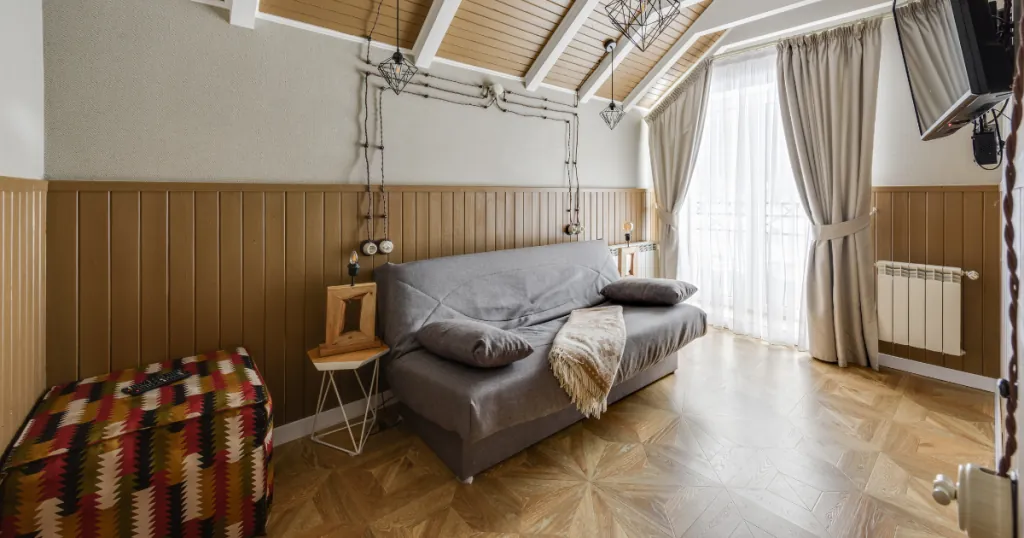
Stores use these names loosely. In general, a sleeper sofa (or pull-out) hides a folding metal frame and a separate mattress inside the base. A sofa bed is the broader term and often means a sofa that converts by folding its own seat and back flat, such as a click-clack. A futon is a frame with one thick, flexible mattress that serves as both seat and bed. A daybed is a bed-sized frame with a back and sides that you sit on sideways, like a sofa.
All of them save space in a studio, guest room or office and let you host overnight guests without a spare room. The trade-off is that one piece must do two jobs, and few designs do both equally well.
Sofa bed mechanisms compared
The mechanism decides how the sofa sits, how the bed feels and how easy it is to convert:
| Type | How it opens | Sleeping surface | Best for | Watch out for |
|---|---|---|---|---|
| Pull-out sleeper (tri-fold) | Remove seat cushions, pull a folding metal frame out of the base | Separate thin mattress, folded twice | Occasional guests; sofa that looks and sits like a normal sofa | Thin mattress, crossbar felt through it, heavy |
| Pull-out sleeper (bi-fold) | Same idea, frame folds once | Mattress folded once, so it can be thicker | More frequent guests | Often deeper sofa and higher price |
| Click-clack / clic-clac | Push the back until it clicks, then lower it flat | Seat and back cushions form the bed | Small spaces, quick conversion | Firm, upright seat; a ridge where seat and back meet; often armless |
| Futon | Fold the frame flat, mattress follows | One thick futon mattress, often 6–8 in (15–20 cm) | Nightly sleeping on a budget, flexible rooms | Lower, more casual seat; mattress needs regular flipping |
| Pull-out trundle or platform | A low platform rolls out under the seat; cushions or a mattress go on top | Low bed, often at or near floor level | Kids, extra sleeping space on sectionals | Low height is hard for some adults to get up from |
| Corner or sectional sofa bed | Pull-out section joins the chaise to form a large bed | Seat foam plus pull-out section | Families, storage in the chaise for bedding | Needs a large open footprint |
| Daybed (with optional trundle) | Nothing to open; a pop-up trundle can add a second bed | Standard twin or full mattress | Daily sleeping, guest rooms, offices | Deep, bed-like seat; less seating than a sofa |
The pull-out sleeper: what to check
Pull-out sleepers look like regular sofas, which makes them the most common type. Their weak spot is the support under the mattress: older and cheaper designs use a metal crossbar that guests feel in their back. Better mechanisms support the mattress on a solid deck, a tight mesh, or slats, so ask what sits underneath before you buy.
The mechanism should open smoothly, stay square and not need two people. Also check the closed seat: because the mechanism takes up room inside the base, some sleepers sit shallower or firmer than the same sofa without a bed.
Click-clack, futon and convertible designs
Convertible designs have no separate mattress: the seat and back cushions become the bed. They are quick to convert and light, which suits small apartments, but the sofa and the bed share the same foam, so a firm bed means a firm seat. Many need a few inches of space behind them to tip the back flat, so check the instructions before pushing one against the wall.
Sleeper mattress types
The mattress makes the biggest difference to how well your guests sleep. Pull-out mattresses must fold, so they are thinner and softer-edged than a normal bed. The main options:
| Mattress | Feel | Pros | Cons |
|---|---|---|---|
| Innerspring | Traditional, bouncy | Familiar feel, often the lowest price | Thin layers over springs can let you feel coils and the frame |
| Memory foam or gel foam | Contouring, quiet | Folds well, hides the mechanism better, no springs to poke through | Can sleep warm; quality varies with foam density |
| Hybrid (coils plus foam) | Supportive with a softer top | Closer to a regular bed | Heavier and usually limited to bi-fold or larger sleepers |
| Air or air-over-coil | Adjustable firmness | Can be pumped to the sleeper's liking, light to move | Needs a pump and power; can lose air or develop leaks over time |
Foam density matters more than the word "memory": denser foam generally keeps its shape longer. A sleeper mattress is also a wear part, so if the bed will be used often, budget for replacing the mattress at some point.
Sizes: sofa width and bed size
Sofa beds usually come in twin, full and queen sleeping sizes, and a few large models offer a king. The bed size sets the sofa's minimum width, because the mechanism has to fit between the arms.
| Sleeper size | Typical sleeper mattress | Standard mattress (for comparison) | Rough overall sofa width | Sleeps |
|---|---|---|---|---|
| Twin | About 38 x 72 in (97 x 183 cm) | 38 x 75 in (97 x 191 cm) | Often a chair-and-a-half or loveseat, around 50–65 in (127–165 cm) | One adult or child |
| Full | About 54 x 72 in (137 x 183 cm) | 54 x 75 in (137 x 191 cm) | Around 70–80 in (178–203 cm) | One adult comfortably, two snugly |
| Queen | About 60 x 72 in (152 x 183 cm) | 60 x 80 in (152 x 203 cm) | Around 80–90 in (203–229 cm) | Two adults |
These are typical figures, so check the exact numbers for each model. Note the shorter length: 72 in (183 cm) is short for tall guests. Regular fitted sheets can also be loose on sleeper mattresses; sleeper-sized sheets or sheet straps fit better. For a broader overview of sofa sizes, see our guide to standard sofa dimensions.
How to measure for a sofa bed (open and closed)
A sofa bed has two footprints, and the open one is the one that usually causes problems. Measure before you shop:
- Measure the wall or space. Note the width available for the closed sofa, leaving room for side tables or a walkway if you need one.
- Find the open length. Check the "depth when open" in the product specs. Pull-out sleepers often reach 80–90 in (203–229 cm) from the wall; add any gap needed behind the back.
- Mark it on the floor. Use painter's tape to outline the open bed. Make sure a coffee table can be moved out of the way and that doors, closets and radiators are not blocked.
- Leave room to walk. Aim for about 24 in (61 cm) of clear space along at least one side and the foot of the bed so guests can get in and out.
- Check the delivery route. Sleepers with metal mechanisms are heavy and cannot be taken apart easily. Measure doorways, hallways and stairs as described in our guide on how to measure for a sofa.
In tight rooms, a click-clack, futon or daybed usually needs less open floor area. Our guide to sofas for small spaces has more layout ideas.
Comfort as a sofa and as a bed
Most disappointment comes from testing only one mode: a sleeper can be lovely to sit on and poor to sleep on, or the reverse. Test both:
- As a sofa: sit for several minutes. Check seat depth, seat height and whether you feel the frame.
- As a bed: lie on your back and side for a few minutes each. Feel for the crossbar, sagging and gaps at the edges.
- Conversion: open and close it yourself. If it is awkward in the store, it will be awkward at bedtime.
- Construction: look for a sturdy frame, such as kiln-dried hardwood or solid engineered wood, and a solid steel mechanism. Our sofa construction guide explains what separates a durable frame from a weak one.
- Fabric: choose a cover that is easy to clean, since bedding, guests and snacks all end up on it. Our comparison of sofa upholstery fabrics can help.
- Warranty and returns: check whether the mechanism and mattress have their own warranty terms, and read the return policy if you buy online.
Can a sofa bed replace a regular bed?
It can, if you choose for it. A pull-out used every night wears quickly: the thin mattress compresses, the mechanism takes daily stress, and making the bed every day gets old fast. For nightly sleeping, a daybed with a standard mattress, a futon with a thick mattress, or a well-built bi-fold sleeper with an upgraded mattress is a better bet.
If you have back or joint problems, our guide to the best sofa for back pain covers support in general terms, but follow your doctor or physical therapist's advice on what to sleep on.
Make it comfier with a mattress topper
A mattress topper is the simplest upgrade for almost any sofa bed. It cushions a thin mattress, softens the feel of springs and crossbars, spreads body weight more evenly and protects the mattress from wear.
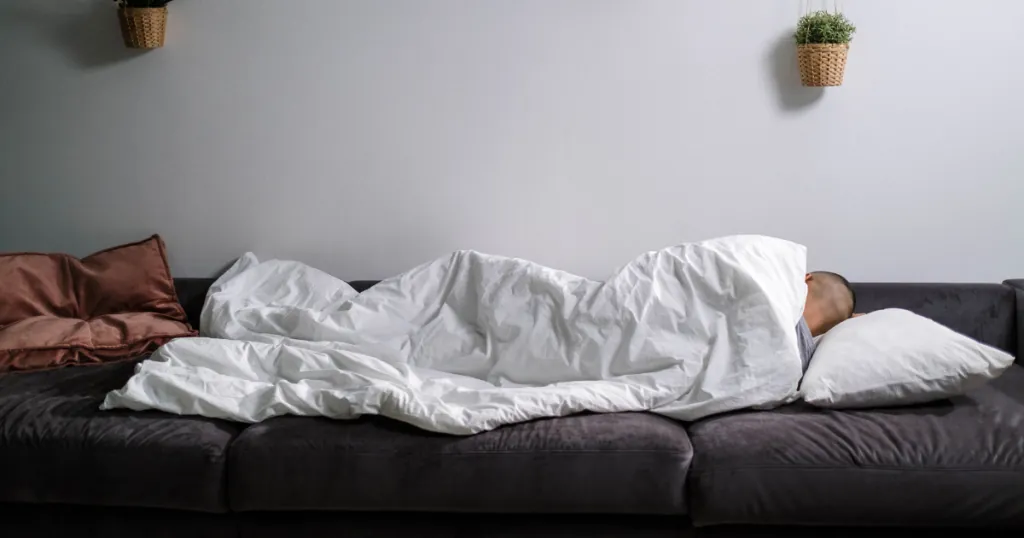
Toppers come in memory foam, latex, polyester fiber, wool and down or down alternative, usually from 1 to 4 in (2.5–10 cm) thick. When choosing one for a sofa bed, consider:
- Thickness: 2–3 in (5–8 cm) adds real comfort without being too bulky to store. Thicker toppers feel plusher but must always be removed before the bed folds away.
- Material: memory foam hides the frame best; latex is springier and often sleeps cooler; fiber and down toppers feel soft but compress faster.
- Size: match the sleeper mattress, which is often shorter than a standard bed. A topper that is too big bunches up at the edges; too small leaves gaps.
- Grip and care: a non-slip base or corner straps keep it in place; a washable cover keeps it fresh.
Tip: Store the topper rolled in a breathable bag with the guest bedding, ideally in a storage chaise or closet near the sofa. Then the whole bed can be made up in a few minutes.
Getting a sofa bed ready for guests
- Test the mechanism. Open the bed a day or two early so you are not discovering a stuck frame at bedtime.
- Clean it. Vacuum the mattress and the inside of the base, where crumbs, coins and dust collect. Let the mattress air out for an hour if it has been folded for months.
- Add comfort layers. Put the topper on, then a mattress protector, then sheets. Soft, breathable sheets and a warm blanket make a big difference.
- Offer extra pillows. A choice of firmer and softer pillows lets guests set up the bed the way they like it.
- Explain the bed. Show guests how to close it, or ask them to leave it open so you can fold it. Point out where the light switch, outlet and spare blanket are.
Between guests, vacuum the bed, rotate the mattress if it is reversible, and avoid sitting on the foot of the open bed, which strains the mechanism. For comfier everyday seating, see how to make a sofa more comfortable.
Daybeds and other alternatives
A daybed is a cross between a sofa, a bed and a chaise lounge. It has a back and arms, sits like a deep sofa during the day and holds a standard mattress at night, usually twin size, though full and queen versions exist. Many have a trundle underneath: a second mattress that rolls out, and on pop-up trundles rises to the same height to create one large bed.

Pros
- Sleeps on a real mattress, so it suits nightly use
- Nothing to unfold; just add bedding
- Compact footprint in small living rooms, guest rooms and offices
- Many styles, from mid-century and Scandinavian to French country and bohemian
Cons
- Usually sleeps one person unless it has a trundle
- The deep seat needs bolsters or plenty of pillows to sit upright
- Less seating for larger groups than a full sofa
- Needs bedding or a fitted daybed cover, which adds to the cost
Care is simple: vacuum regularly, blot spills with a damp cloth and mild detergent, rotate the cushions or mattress, and keep the daybed out of strong sunlight. Test any fabric protector spray on a hidden spot first.
For occasional guests, a futon, a chair bed or a good air mattress stored in a closet also work. If you mostly need more seating rather than a bed, compare a sectional vs a sofa instead.
Frequently asked questions
Are sofa beds comfortable to sleep on?
They can be. Comfort depends mostly on the mattress and the support beneath it. A pull-out with a thin innerspring mattress over a crossbar is rarely comfortable, while a bi-fold sleeper with a thicker foam mattress, a futon, or a daybed can be comfortable for regular use. A 2–3 in (5–8 cm) topper improves most sofa beds.
What is the difference between a pull-out sofa bed and a convertible sofa bed?
A pull-out (sleeper sofa) stores a separate folding mattress and metal frame inside the base. A convertible, such as a click-clack or futon, has no separate mattress: you lower the back, and the seat and back become the bed.
Can you use a sofa bed every night?
You can, but most pull-out sleepers are designed for occasional use and wear faster with nightly sleeping. For daily use, a daybed with a standard mattress, a futon with a thick mattress, or a well-built bi-fold sleeper with an upgraded mattress is a better choice.
What size sheets fit a sofa bed?
Sleeper mattresses are often shorter and thinner than standard beds, for example about 60 x 72 in (152 x 183 cm) for a queen sleeper. Sleeper-sized sheets fit best; standard sheets work but may need sheet straps to stay tight.
How do I stop feeling the bar on a pull-out bed?
Add a mattress topper of at least 2 in (5 cm), and consider replacing an old, compressed mattress with a foam sleeper mattress of the same size. When buying new, look for a mechanism with a solid deck or tight mesh support instead of a crossbar.
A sofa bed is a smart way to make one room do two jobs, as long as you choose the mechanism for how often it will be slept on and measure the open bed carefully. For more help choosing, compare a loveseat vs a sofa or browse all of our sofa buying guides.
 Sectional vs Sofa: Which Is Right for Your Living Room?Sectional or a standard sofa? Compare floor space, seating, room layout, moving and cost, with measurements and a simple checklist to decide.
 Sofas for Small Spaces: How to Choose One That FitsHow to pick a sofa for a small living room or apartment: the right size, arm and leg styles, depth, colors, sleeper and modular options, and what to avoid.
 How to Measure for a New Sofa (Room, Doorways and Stairs)Measure your room, doorways, hallways and stairs before buying a sofa. Step-by-step instructions, clearances and the diagonal-depth test for tight doors.
 What Makes a Good Sofa? Frame, Springs and Cushions ExplainedHow to judge sofa quality: frame materials and joints, spring systems, foam density and cushion fills, plus quick tests you can do in a showroom.